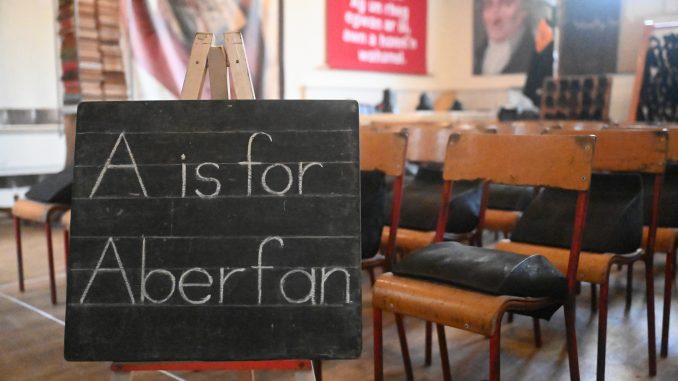
Artist David Garner remembers Aberfan, with moving artistic tribute.
On 21st October, 1966, an otherwise anonymous village in the South Wales valleys joined a very small list of place names that will forever be associated with tragedy.
That village, Aberfan.
At 9:13am 100,000 tons of coal waste, which had been tipped on the mountainside above Aberfan, slid down the mountain, engulfing Pantglas Junior School and a row of houses. 116 children and 28 adults died.
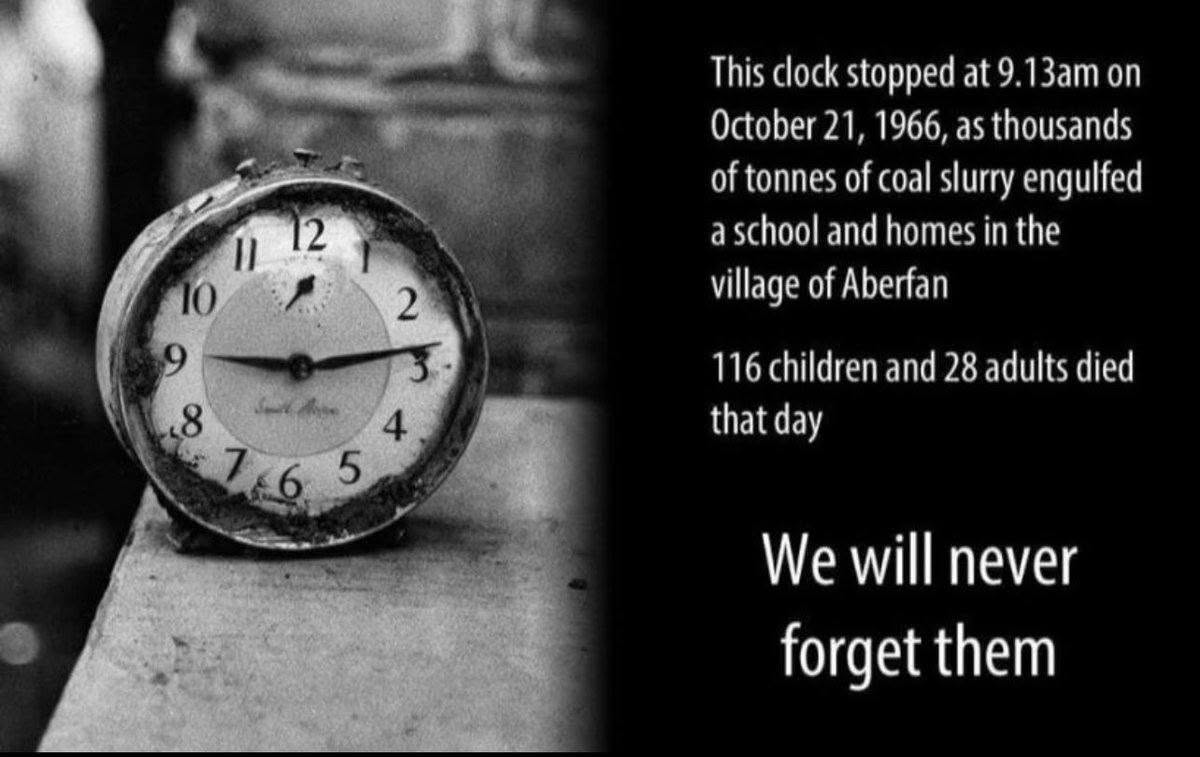
It was a tragedy that shook the village, the world and the political establishment. It was a man-made tragedy that was completely avoidable – the tip had been built over a natural spring. The tragedy was followed by understandable and justifiable anger. But it was also followed by denial, prevarication and injustice. It was thirty years before there was any admission of wrongdoing. By that time, many of those who had campaigned for justice were no longer with us. No criminal charges were ever brought and no individual was ever held to account.
This week, the 60th anniversary, will see many column inches, many TV hours and many dignitaries paying tribute. As I type, the Prime Minister visited the village yesterday to lay a wreath on the graves of the victims, and the King will visit tomorrow.
Meanwhile, two valleys and twelve short miles away, artist David Garner is quietly paying tribute in the way that artists do: with a work remembering the victims.
David Garner is a critically acclaimed instillation artist who focuses heavily on found objects. His work has been exhibited all over Europe.
“My artwork takes a critical view of social, political and cultural issues. The subjects of my work concern a broad range of historical and contemporary issues, from early work dealing with the demise of industry, particularly in Wales, to a more recent engagement with global concerns, such as the Arab Spring. Although my work evokes specific events – Auschwitz, Aberfan, the Iraq War and the rise of Islamophobia – they are not restricted by narrative intrusion into these events. The images created have a more universal outlook so that a work dealing with the drowning of the Welsh community of Tryweryn can also be applied to the Ilisu Dam in Turkey. In this sense, what is included in my work is also as important as what is omitted”. From talk to Contemporary Art Society for Wales, February 2016
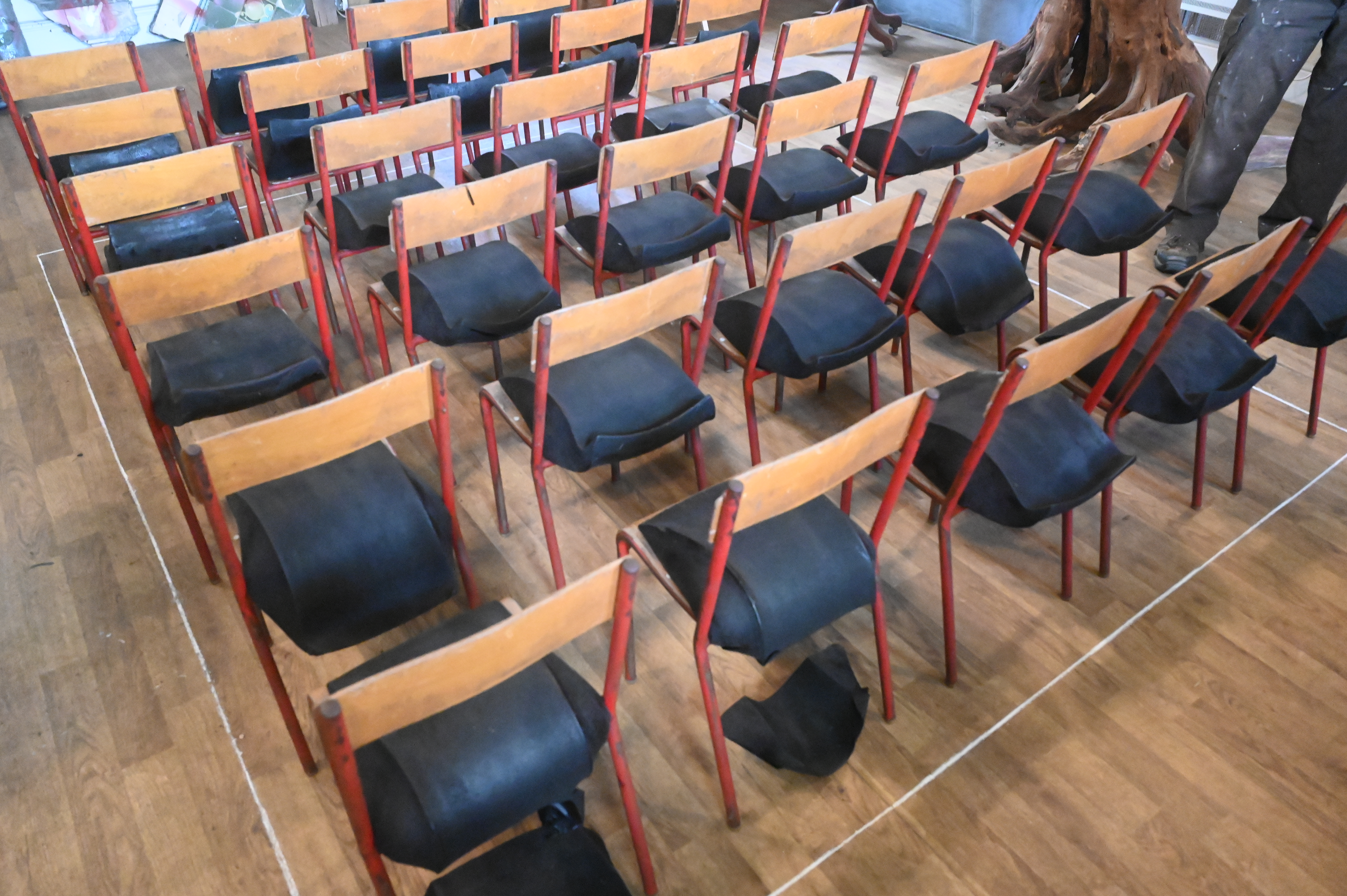
The centerpiece of the work is a collection of school chairs. As with everything Garner does, authenticity was key. The chairs were original school chairs of the type that would have been used in the school at the time of the tragedy.
“I wanted to place a wedge of bitumen on each chair, to represent the coal tip. I did not know how to mold bitumen so did a lot of research. You cannot use a wooden or plastic mold, they will be destroyed by the heat, so I taught myself how to use casting sand. At the time, the people I was getting advice from advised me that the wedges would not hold their shape forever, they would deform over time. In the thirty years since I first cast them, many of them have deformed and slipped out of shape, which in its own way, is quite profound”. David Garner 19/10/26
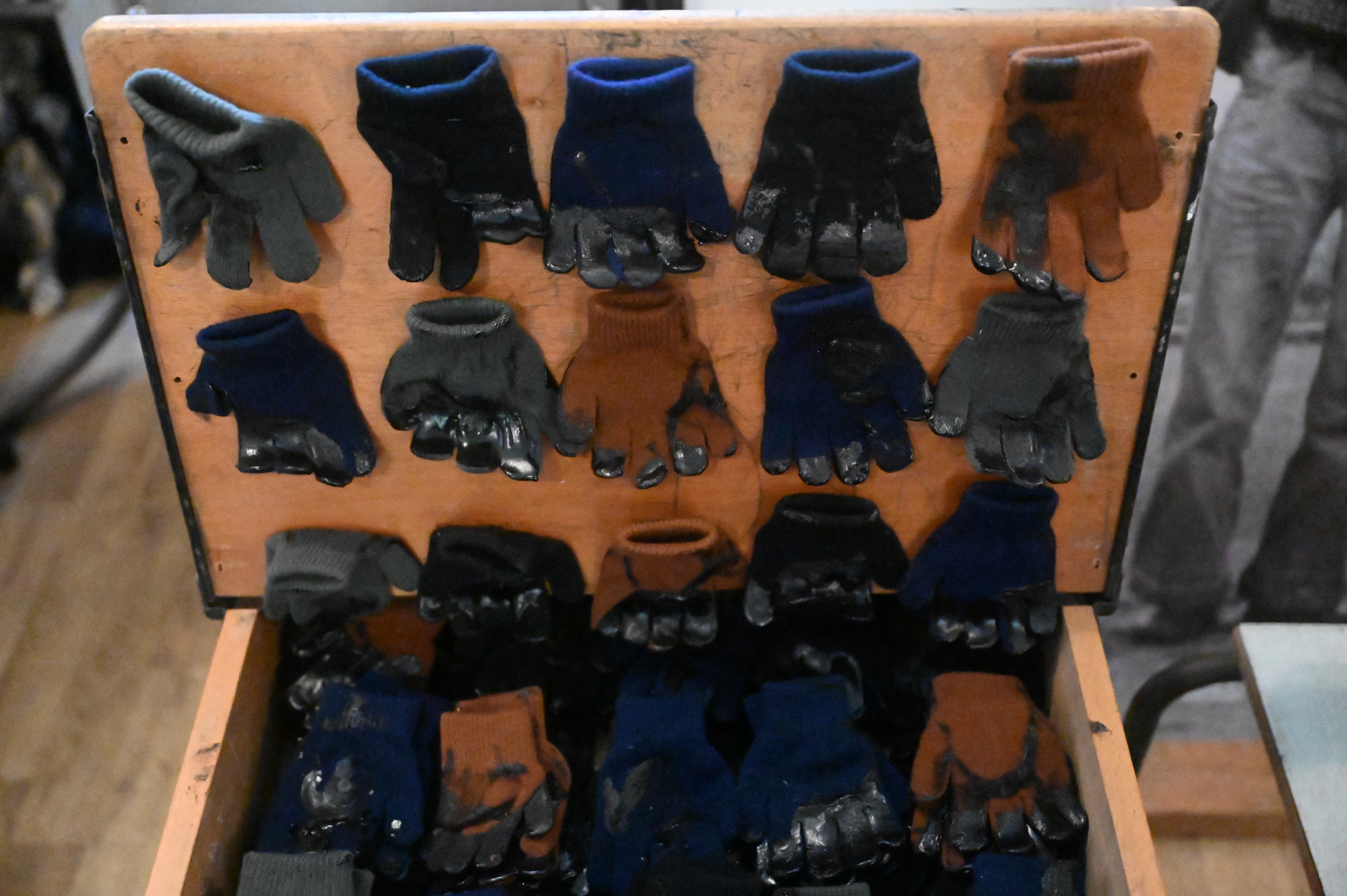
The exhibition also includes a larger-than-life abacus made by Garner, and a school desk of the type that will be familiar to those of us who were in junior schools up and down the country in 1966. Mounted on the abacus and the desk are 116 bitumen-stained gloves: one for each child who lost their lives that day.
The work was first exhibited in Newport Museum/Gallery to mark the 30th anniversary of the tragedy, then later in Ysgol Gyfun Cwm Rhymni, Fluer-de-lys, to mark the 40th anniversary.
“The school contacted me and offered me an empty classroom for a week. They totally embraced the project and had the history department involved. I invited teachers from Aberfan to view the installation. I wasn’t sure how they would receive it because it is obviously an incredibly sensitive subject but they were very appreciative of the fact that we are keeping the memory of the children alive. It is something we must always remember and ensure nothing like this ever happens again.” David Garner 19/10/26
There was a huge battle with the National Coal Board to remove the remaining tips above Aberfan and much work has been done on tip safety in the intervening years. But many coal tips are still present in the valleys and some of them are still moving. There is still a lot of work to be done.
“A is for Aberfan” will be available to view in Babel Chapel, Cwmfelinfach, from 21st to 24th October 2026 9am to 4pm – and David Garner will be on hand to talk you through the exhibition.