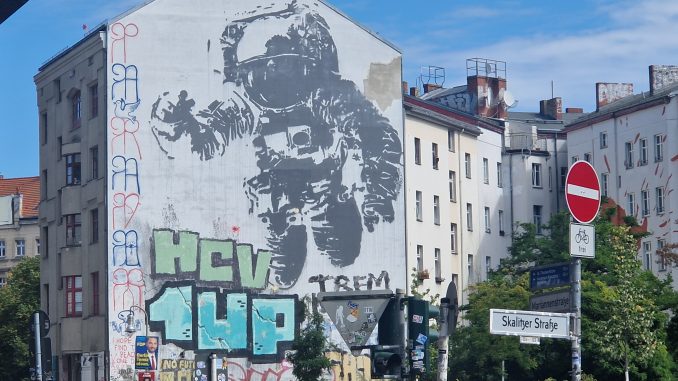
First full day in Berlin. Counterculture, shoe-gazing and unexpected friends in the bar area.
We had booked a walking tour for eleven of the AMs. Not being entirely sure how easy the public transport would be to navigate, we were up early for breakfast. A continental breakfast is not a concept we are unfamiliar with, but some hotels doff their cap to a ‘proper’ breakfast. Not our hotel. It’s strictly bread, cheese, dust, weeds and juice. But hey, it’s healthy. Ish.
After munching on the few vegetarian items we could find, we sat looking at the rain and checking the forecast. Eventually, remembering the phrase, ‘no such thing as bad weather, just inappropriate clothing’, we don waterproof jackets and head out into the big bad world.
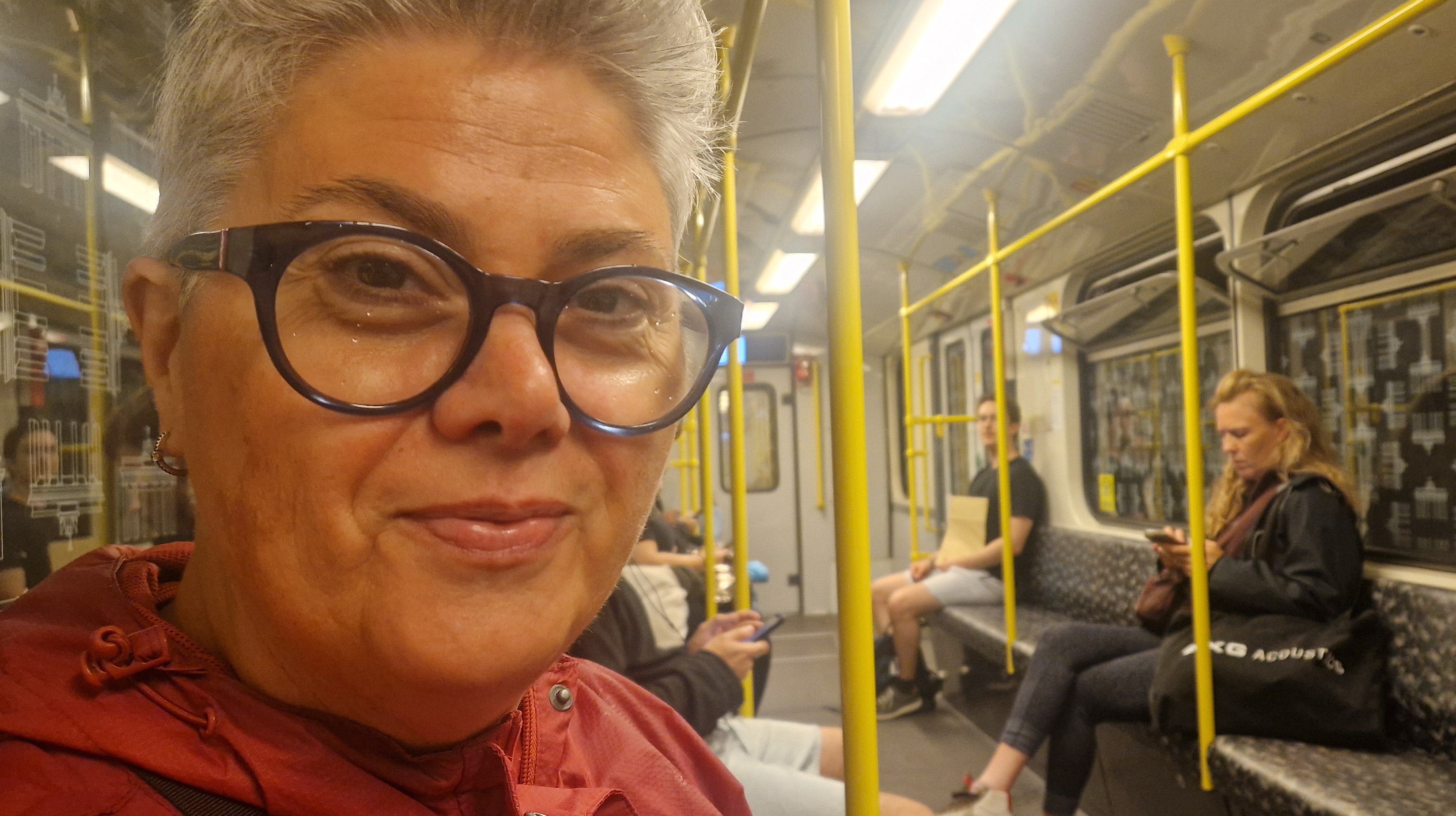
There’s a U-Bhan station near our hotel. Which is handy. And our destination is on one line with no changes required, which is even betterer. It’s a simple enough system, you buy a ticket from a machine. We bought a 24 hour rover ticket, which was €12. This ticket can be used at anytime, but before you get on the train for the first time, you stick the ticket in a validation machine and it stamps it with date and time, so the ticket has to be used that day.
You don’t need to present the ticket to get on the train and nobody checks, so there is a huge level of trust involved here. However, they have plain clothes ticket inspectors who will randomly check tickets and the penalty for not having a ticket is quite heavy, so you might as well just get one. I’m not sure what the penalty is: rumours that you get tied to a chair and bummed are unconfirmed.
There are two primary lines, U-Bahn and S-Bahn. U-Bahn operates strictly within the city, whilst S-Bahn operates within the city but also goes out to the suburbs and connects with national train lines.
Some lines were wholly within the east of the city, some wholly within the west. After the Berlin Wall went up in 1961, some trains ran through West Berlin, but also through East Berlin. Those trains still ran, but the stations in the East were closed so nobody could get on or off and effectively cross the wall. Those stations became known as ghost stations.
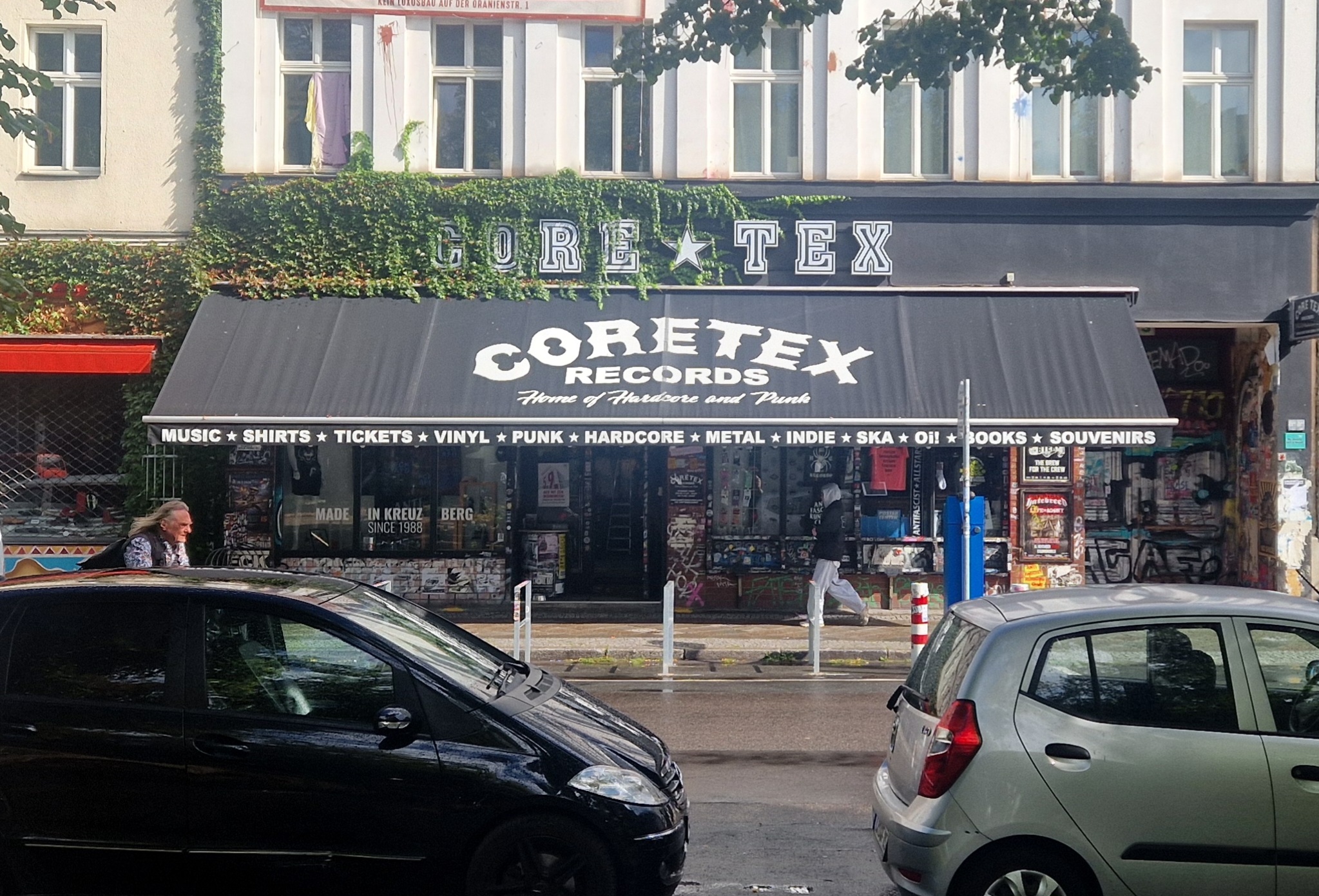
We hop off the train nearest the meeting point for our walk – Cortex Record Shop, a world famous hard-core punk shop. As we hadn’t been sure how easy the train would be (very easy) we were an hour early, so went for coffee. Annoyingly, Cortex wasn’t open till the time our tour was due to start.
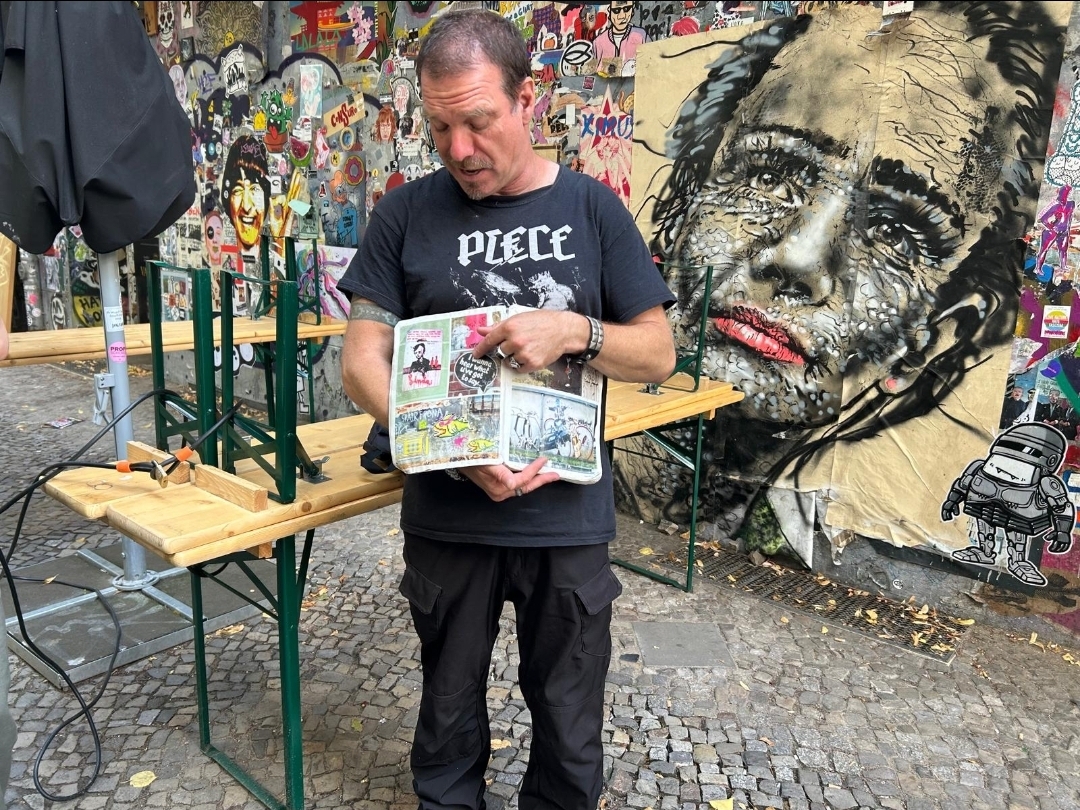
An hour later we are chatting with our tour guide, Adrian. By this time the rain had passed and waterproofs were discarded. It’s becoming a warm, pleasnt day.
Adrian is from Australia originally but has lived and worked all over the world, finally settling in Berlin in 2006. In addition to being a tour guide he’s a graffiti artist and has run bars and clubs in the city in the past. For the next three hours we walk off the beaten track looking at counterculture places of note, and graffiti. Lots of graffiti.
After the Second World War migrants from outside of Germany were encouraged to come and help rebuild the city. Just as Irish workers built a lot of infrastructure in the UK, a lot of Turks helped rebuild Berlin. Hence an abundance of Turkish cafes and shops.
When the wall went up in ’61, homes near the wall, with border guards looking through your windows, were not considered desirable residences, so many people moved away. To encourage people to move in, the government created several incentives. Residents would be exempt from national service and wages would be enhanced by 7%. As a result, a lot of peace-loving hippies and artists moved in and the area soon became quite bohemian. Particularly in Kreuzburg (where we are meeting), where there was wall on three sides of the district.
In 1989 a series of events combined that resulted in a historic reshaping of the world order. Hardly a shot was fired but events that year rank up there with two world wars in terms of how they shook the world.
In no particular order, there was the election of moderate Soviet leader Mikhail Gorbachev; strikes in Poland that culminated in free elections for the first time in forty years and the union Solidarity taking power: peaceful revolutions in Czechslovakia, Hungary, Romania and Bulgaria. There was also the defeat and withdrawal of Soviet troops from Afghanistan. Each domino falling bringing the end of the Soviet Union closer, until it eventually dissolved in 1991.
East Germans weren’t going to be left out of this revolutionary mood and – to cut a very long story very short – on 9th November 1989, the Berlin Wall was first opened up, then very quickly pulled down. Reunifcation of the country wasn’t far behind.
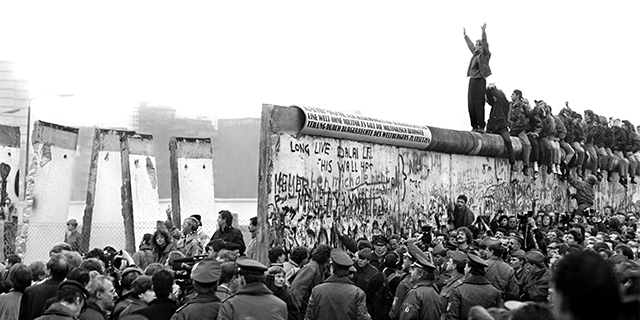
Photo by Carol Guzy/The Washington Post
Then something strange happened. Many East Germans headed West for the perceived better standard of living. This left a void in the east, into which more bohemians, artists, squatters, ravers and punks flooded.
From 1945 to 1989, the two halves of the city had been redeveloped with different aims, and different levels of finance available. Whilst the west was a vibrant modern city, the east was more functional and in many areas rundown.
People were inspired by the rave scene taking the world by storm at the time and former industrial buildings became home to squatted clubs, art spaces and social centres.
There was an added unique factor for Berlin. Whilst capital cities are usually the heart of a country’s commercial and financial hub, Berlin being deep inside East Germany resulted in all the banks and corporations moving out. This meant that this growing bohemian, artistic counterculture movement had plenty of space and time to adapt and set down roots.
Buildings like Kopi, a huge housing complex which was squatted by anarchists in 1990, became a social resource for progressive minded rebels and a live music venue.
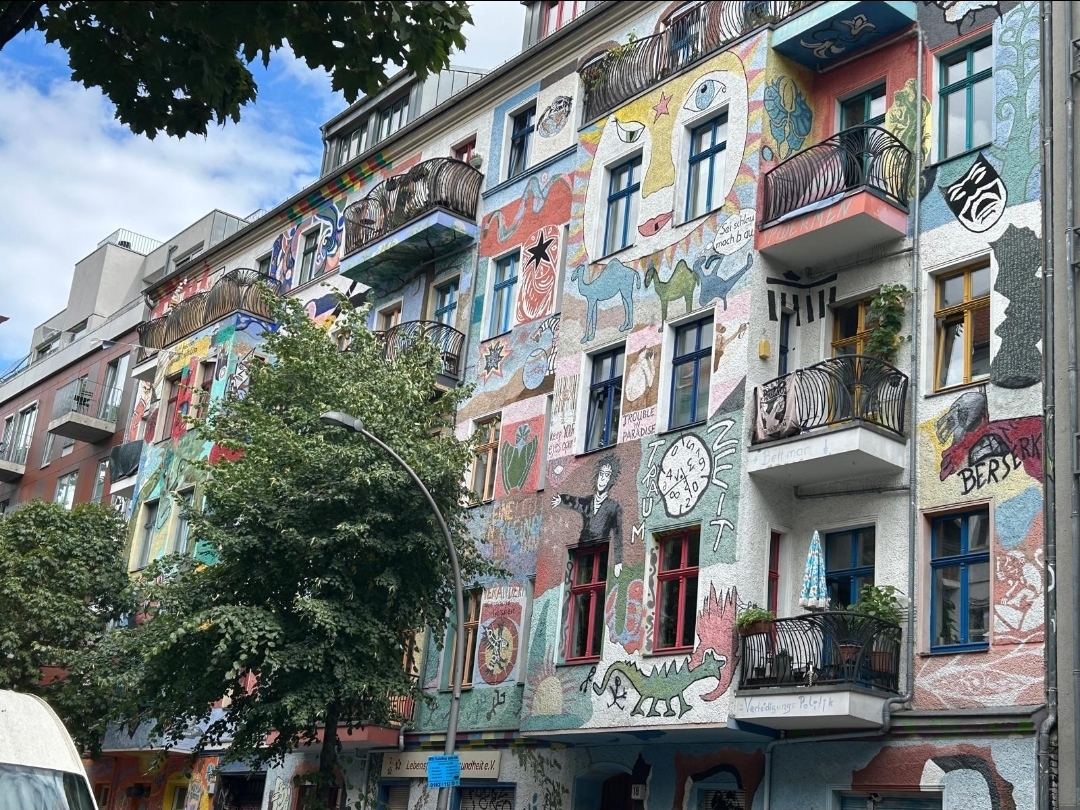
Germany already had a well established Techno scene and labels like Tresor expanded into setting up their own club.
For many years the police left people alone and roots were able to be established. But as is often the way, when an influx of artists make a rundown area cool, a cycle of gentrification begins.
Berghain, a nightclub in a former power station, is often ranked as the most exclusive club in the world with door staff only allowing the ‘coolest’ of ravers enter. Apparently Elon Musk and Britney Spears queued for hours (not together, I hasten to add) but were turned away by the ‘cool police’. Rumour has it Musk then tried to buy the building for €1B after but was told to go forth and multiply.
This is a whole other world from the early squat party scene – and ironically, not very cool in my books. But I haven’t been there so can’t really judge. Whilst stories that it’s impossible to get in are circulated by people who haven’t got in, we spoke to a few people, including our tour guide, who have got in without any problems. I suppose you’ve either got it or you haven’t. Musk clearly hasn’t.
Sat in Wales we have been reading how this cycle of gentrification is well underway. Today we aim to find out the extent of the gentrification for ourselves.
Adrian runs Alternative Berlin Tours. He has his finger on the pulse and is very well informed about the area. I don’t want to give too many spoilers, because that would be doing him out of business. (That, and the fact that I’ll be here typing all day if I try to recall everything we learned.)
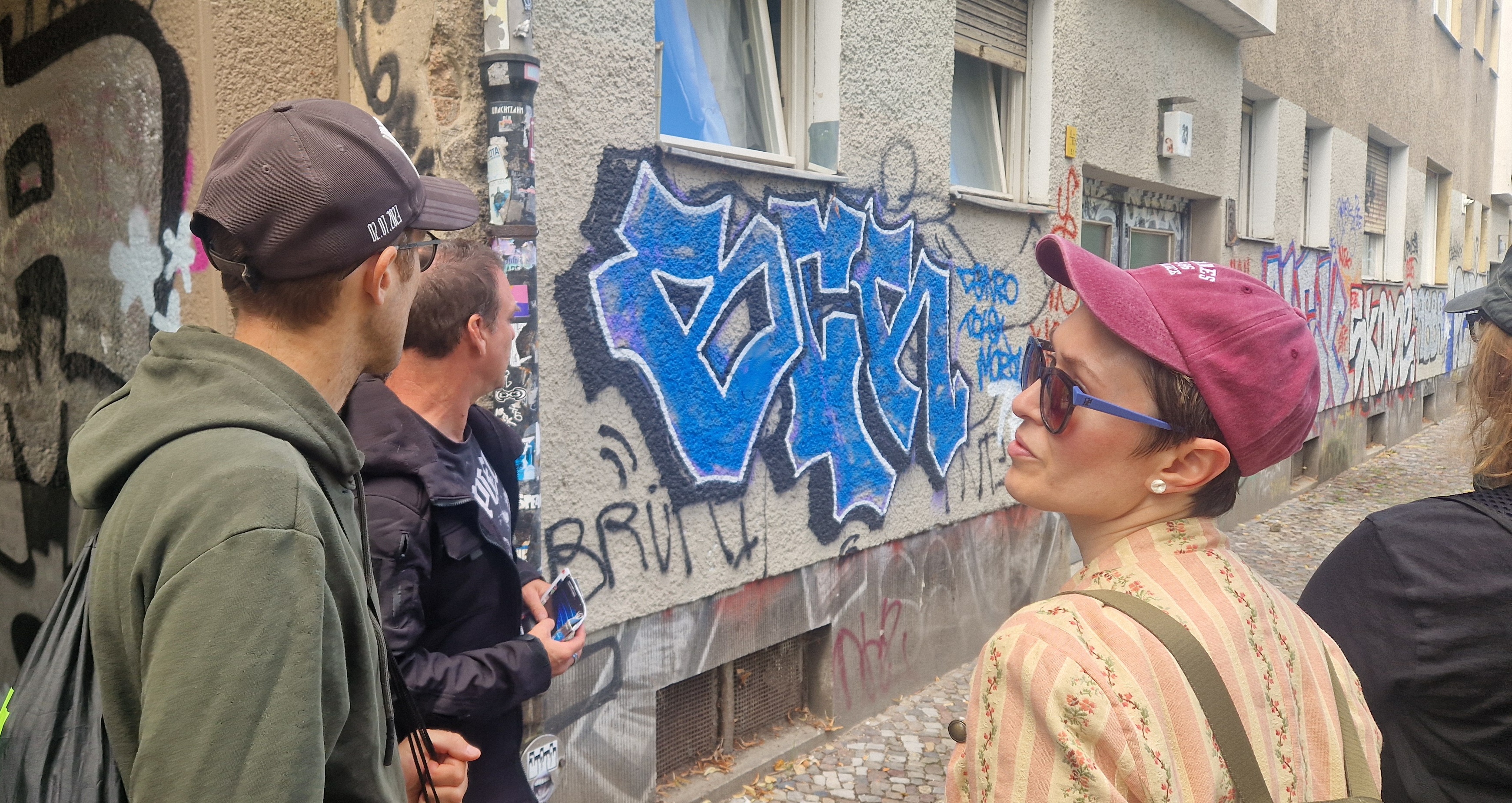
We discuss the difference between street art and graffiti. I say ‘discuss‘ because there is no definitive answer. We talk about different styles of graffiti, some of the unwritten rules, different methods of accessing hard to reach walls and we talk about some of the ‘crews’ that go out creating the art. And there’s a lot of it. This part of the city in particular is plastered in graffiti and street art whereever you look. It’s not for everyone, but I think it gives the area character.
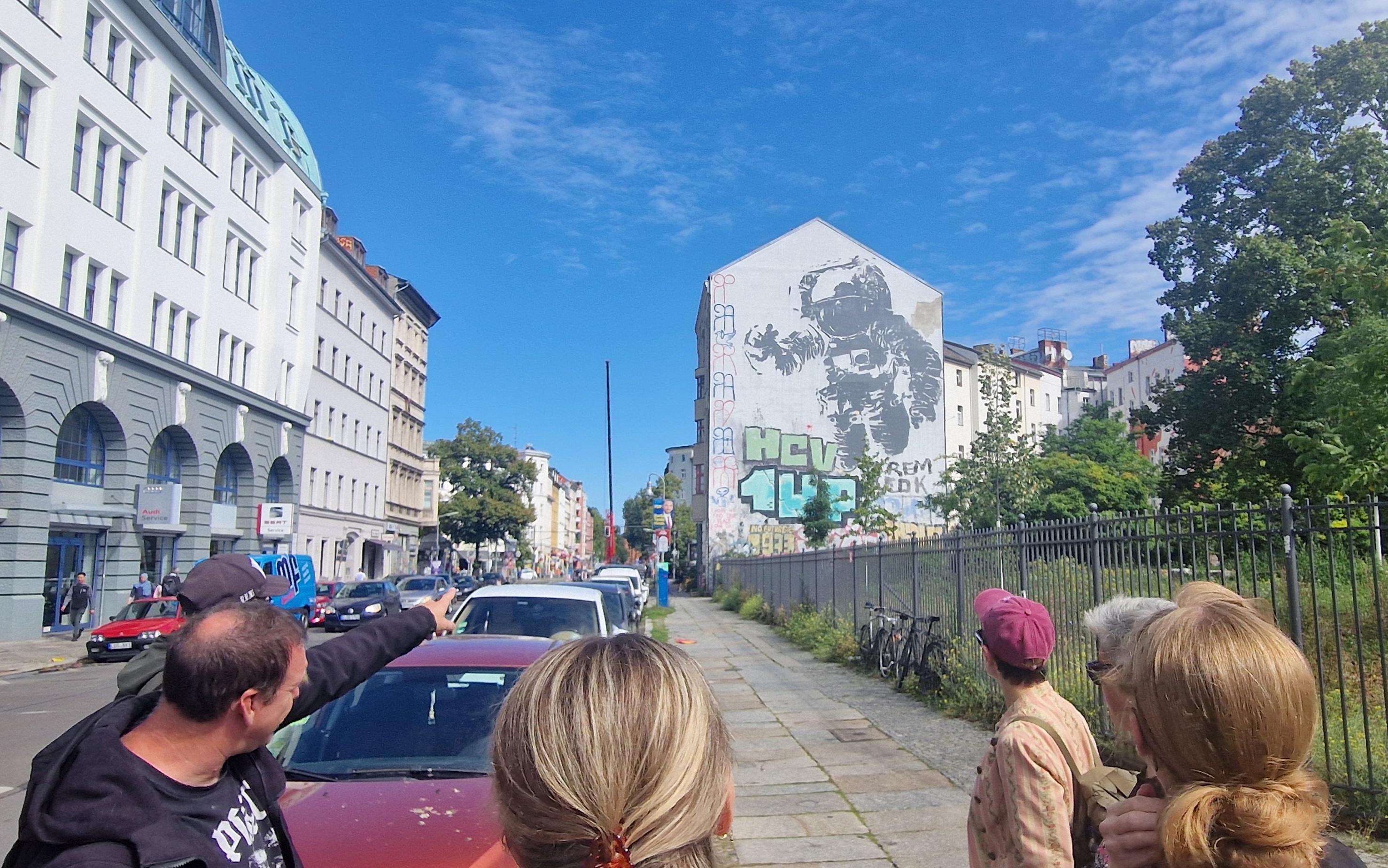
A lot of it is just at street level created by standing on the pavement, but some of it involves climbing, scaffolding, ladders, cherry pickers and even abseiling. The Berlin Kids have been known to stand at the side of a railway line with fire extinguishers filled with seven different colours of paint and to blast them onto speeding trains as they go past creating a rainbow on the side of the train
Some of this sort of thing is very expensive to clean up and there can be heavy fines or even jail if caught. But on the other hand, some of it is never cleaned up, it’s considered art.
In some cases the art is used to send a subliminal message to prospective developers. It’s a way of saying ‘we don’t want your gentrification around here, any white wall will be used as a canvas’, or words to that effect.
On the tour we see soulless examples of how gentrification has won, killing the vibe of the area. But there are also many examples of the people winning and huge protests putting a stop to developments. A squatted hospital being one notable case, and places like Kopi. The tour ends in a huge railway station that had been bombed in the war but is now a collection of bars, restaurants and art spaces – despite attempts to develop the area.
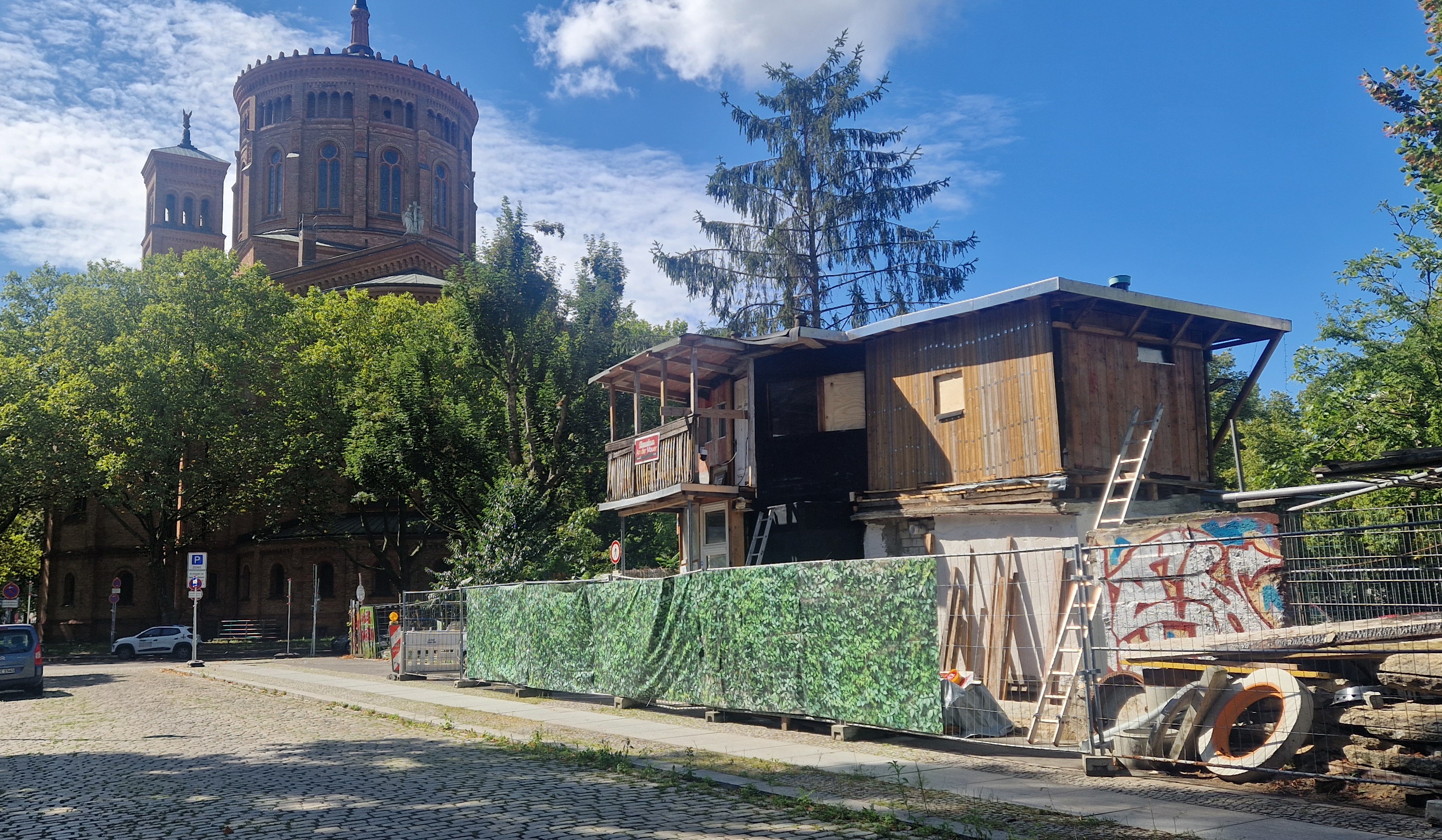
We hear the story of a house built around a tree that the church has stepped in to defend from development. We visit SO36, where huge names in rock played on their way up – including Iggy Pop, David Bowie and Nick Cave. We visit a Jamaican beach bar and a pub frequented by seventy year old original punks. We also learn about ‘Spatis’ – 24 hour corner shops that sell beer and have tables outside for you to sit down and drink – thereby unofficially becoming all night pubs selling beer at a fraction of the price of official bars.
At the end of the tour we have fallen in love with this bohemian city – we haven’t seen the Brandenburg Gate, Check Point Charlie or The Riechstag, but we don’t care. If counterculture is your thing (it is ours) Alternative Berlin is a brilliant crash course on where to hang out and how to understand all this art on the walls.
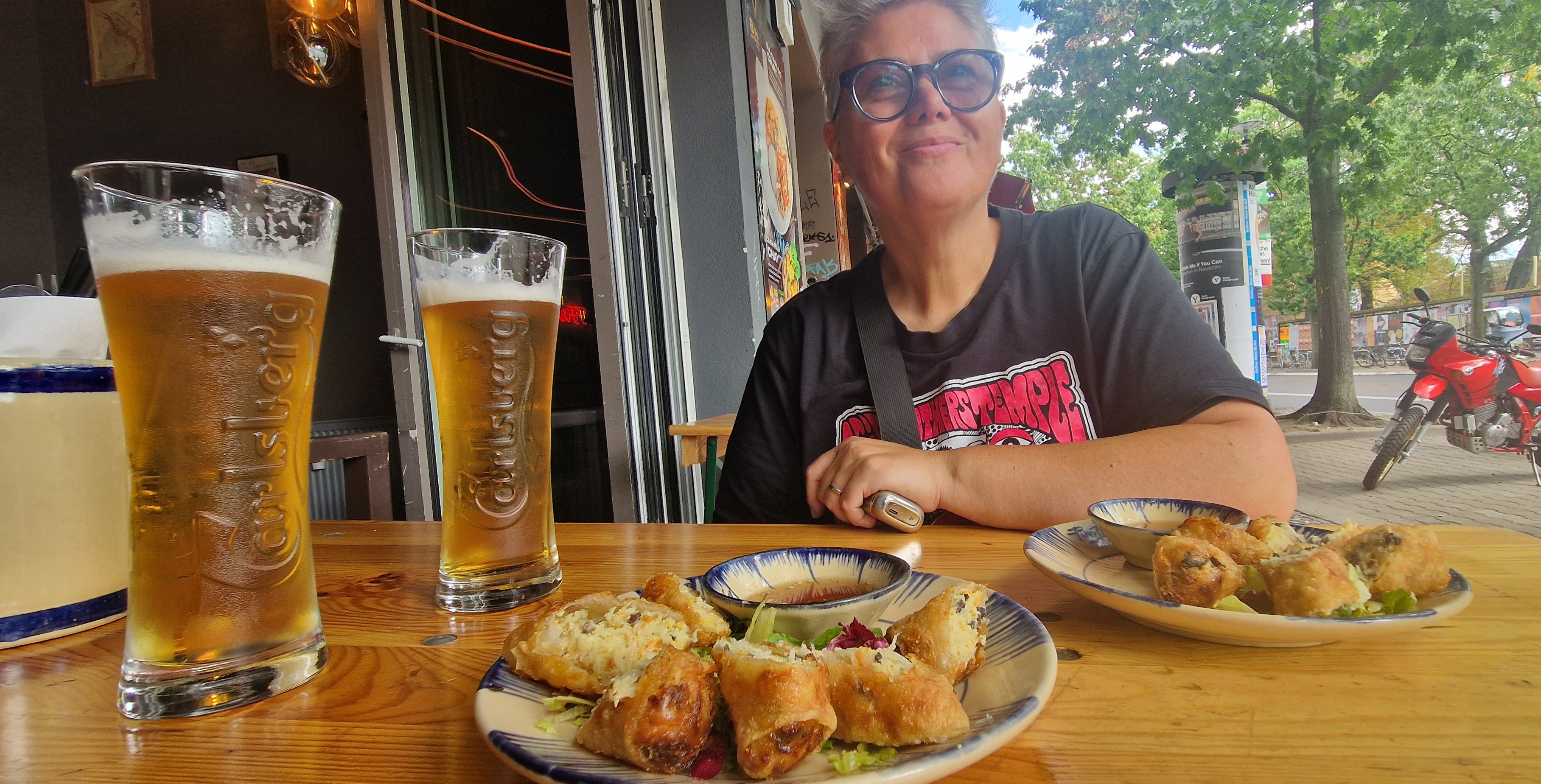
After three hours walking around we hit the nearest open bar, which happens to be an Asian street food restaurant. We sit there chilling and I text a mate from Cardiff who has a German wife and often visits Berlin. I just mention that I love the city. The next thing we know he’s rocking up to us on his pushbike. Which was nice. I hadn’t even known he was in the country.
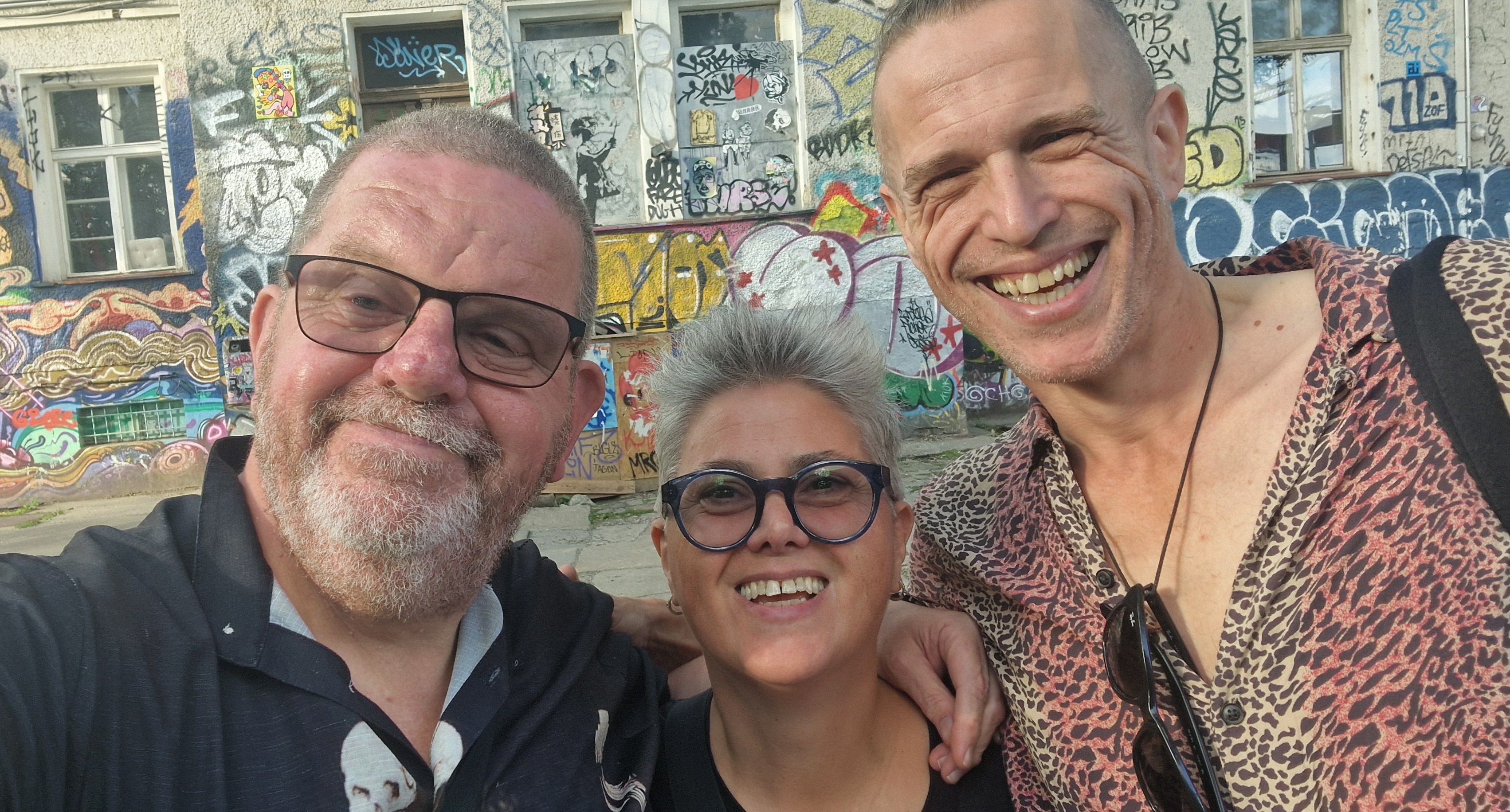
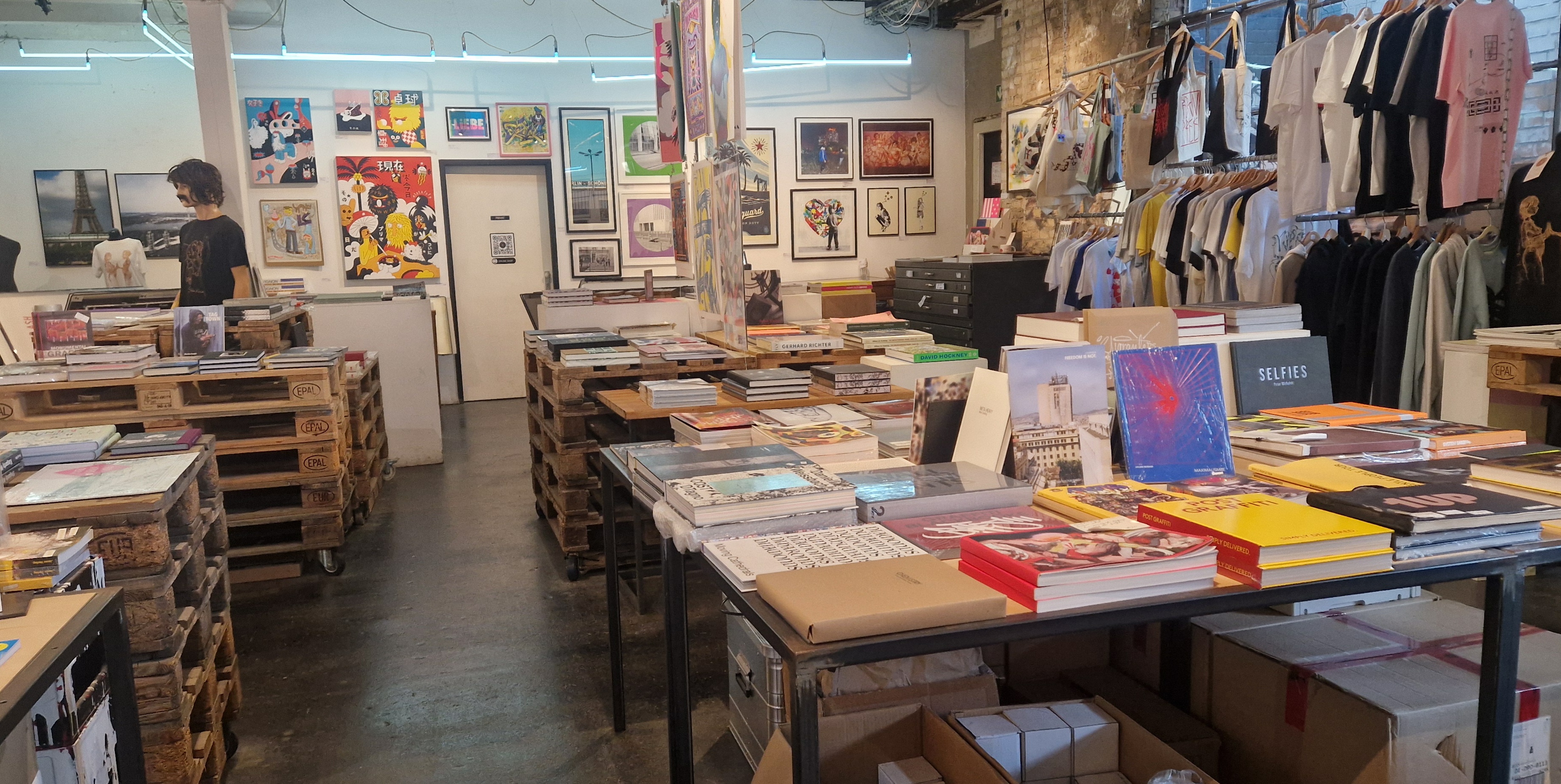
After several beers we head over to Urban Spree, back in the bombed out railway station. We have tickets for a gig there tonight. As well as the gig space there’s a art gallery and a book shop, which mainly sells books about graffiti.
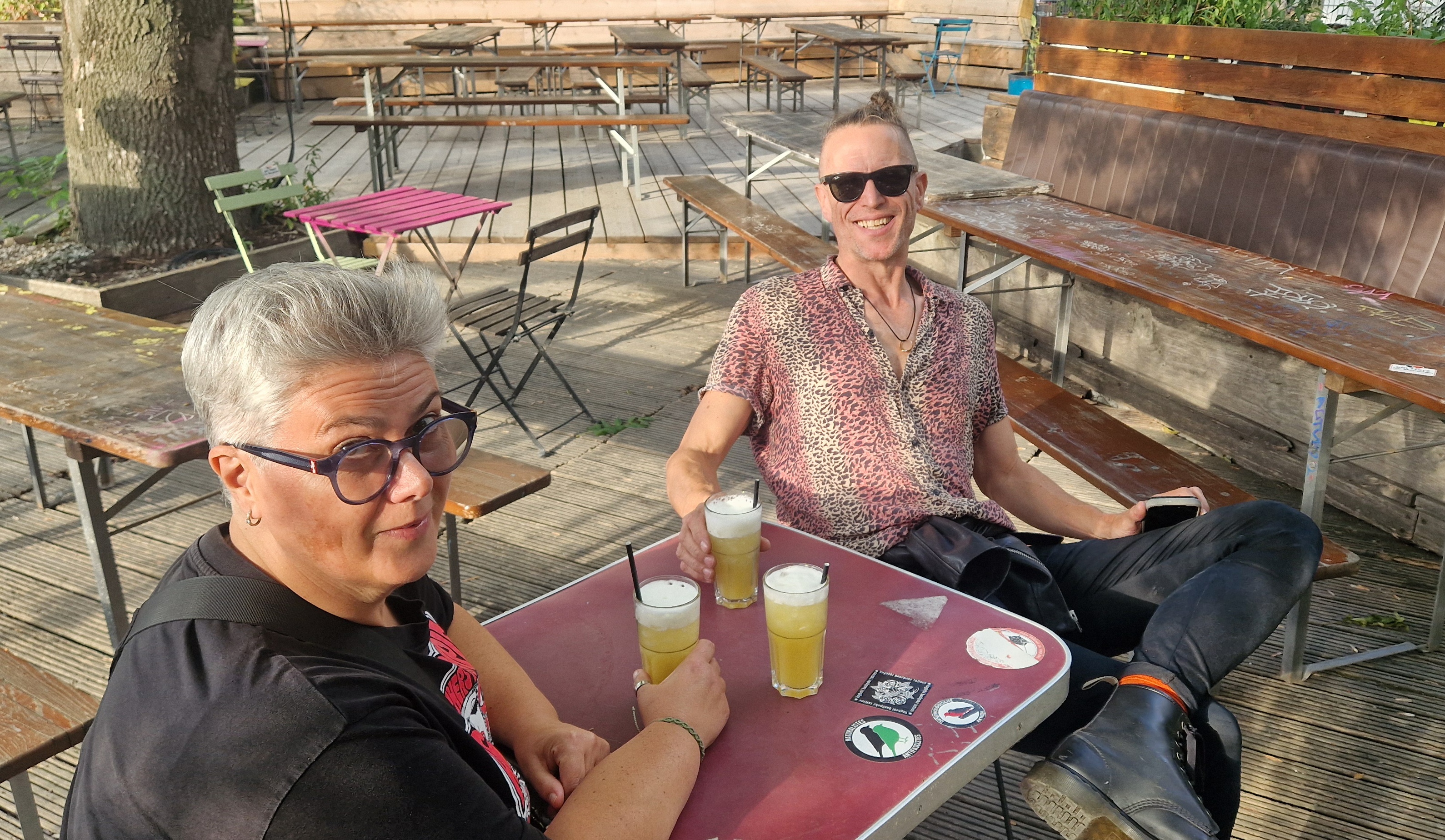
We sit in their beer garden, which resembles a beach bar, drinking cocktails and debating the merits of techno clubs. I love electronic dance music, I regularly belt out psy-trance, drum n bass or deep house on my stereo. I love going to the dance tent of a festival for a bit. But I’ve never really been into going to a club listening to a DJ playing dance music all night, with no live band. Andy, however, loves it, and when we eventually go in to watch the gig, he heads off to Kit Kat to dance his little socks of till the sun comes up. On a Monday! Only Berlin eh.
I regularly hear people tell me they want to relive their youth by going to see a covers band playing the music of their youth. Personally I would rather relive my youth by getting the same buzz of hearing a new band for the first time. And I got that buzz when I looked up New Candys, who are playing Urban Spree tonight. It’s a much maligned phrase, but I think shoe-gaze is an apropriate description. They remind me a little of The Jesus and Mary Chain, but without all the angry feedback. After checking them out I didn’t hesitate to grab tickets.
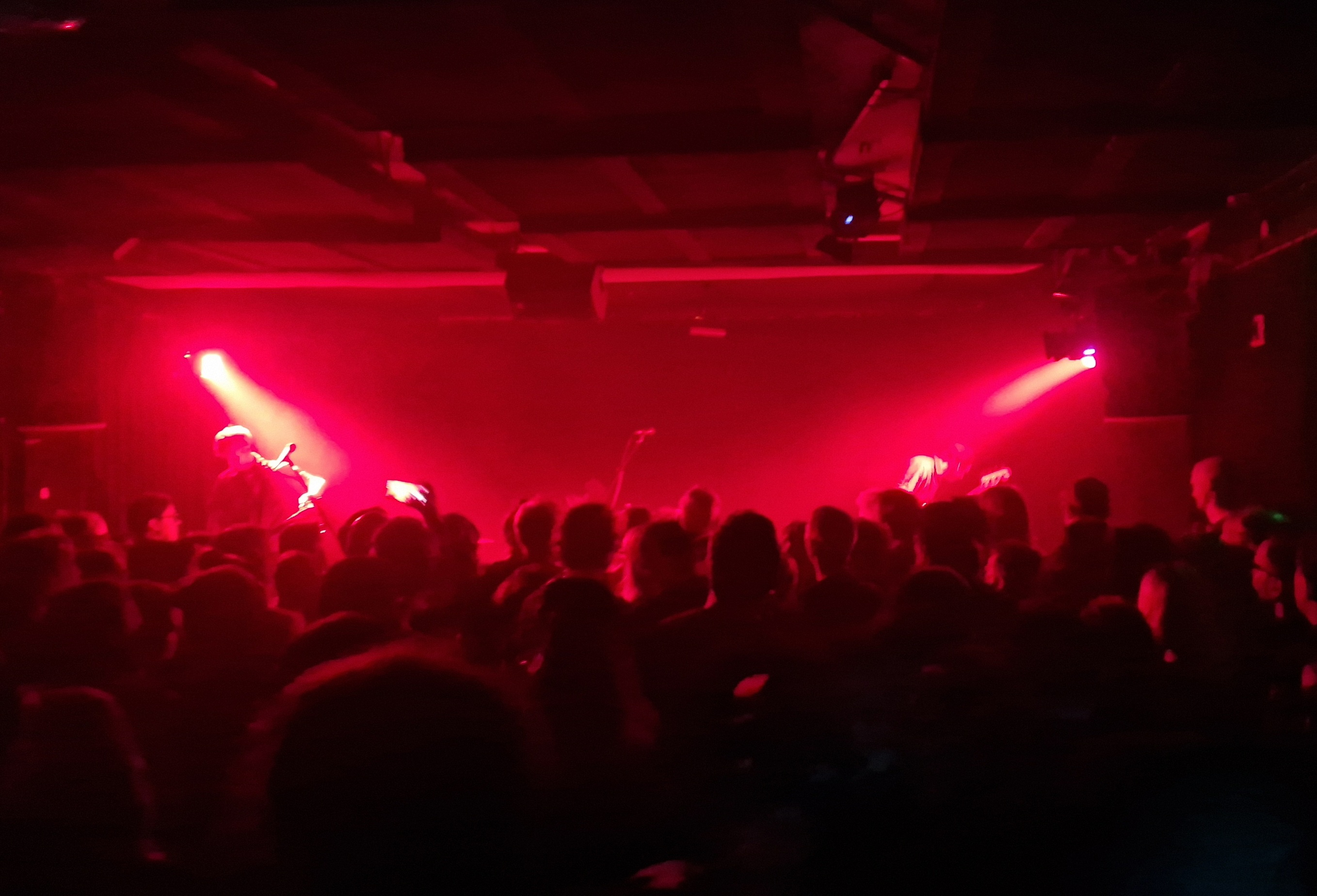
As we enter the dimly-lit small venue (around one hundred capacity) it’s rammed, but not unpleasant. Support band BLKE are in full swing. I hadn’t done any research on these guys but I’m immediately impressed. Again, no frills, indie rock and the minimalist stage lighting suits their style perfectly.
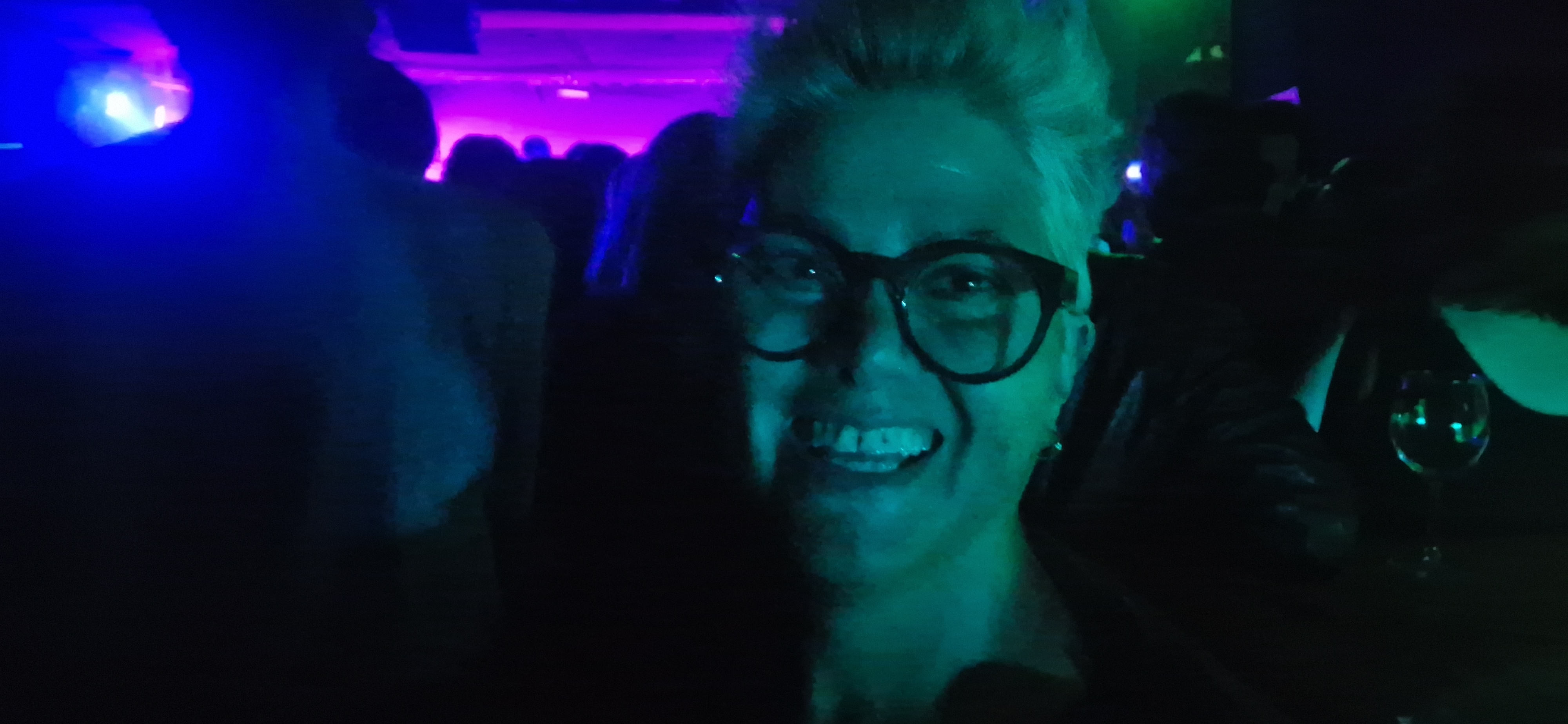
We head out into the beach bar between bands and when we file back in we accidentally find ourselves perched next to the bar. It would have been rude to occupy such a space and not to have a few gins.
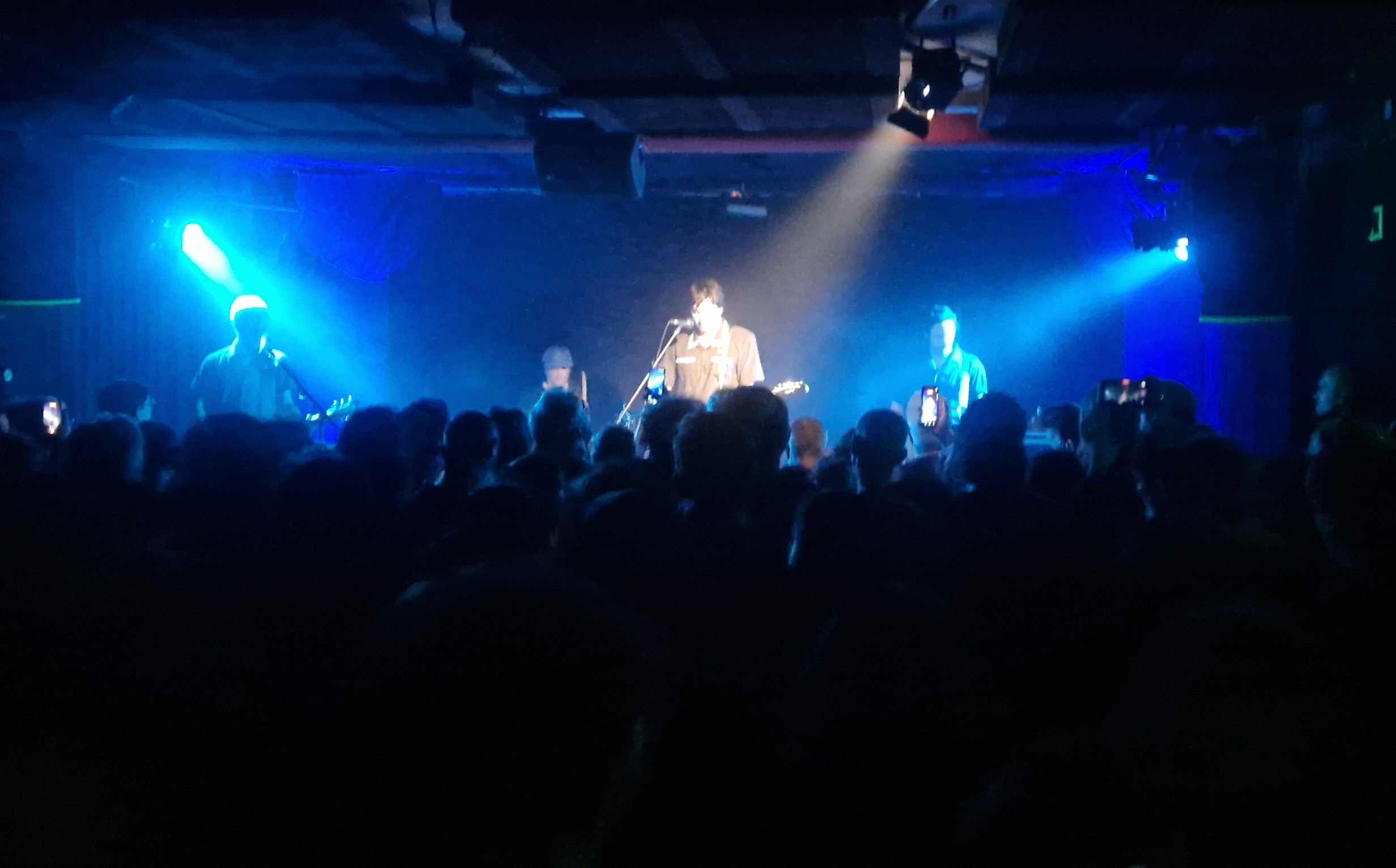
New Candys were just what we had hoped and expected. Neither bands bothered with formalities like introducing songs or engaging with the audience, but that suits their style of music. Focused and almost introverted, making sure they got the sound they wanted, and hopefully the audience would like it to. They did. As I queued to get New Candys’ latest album from the merch stall several knowledgeable music buffs engaged me in conversation. They’re not a good time danceabout band, they are serious people, making serious music, for serious music lovers. That’s not to say there was no joy in the room, there were smiles aplenty as people tapped their toes and nodded their heads to the mesmerisingrhythms.
Eventually we head out into the night, rain has returned, but the U-bahn is not far and we are soon tapping the code into our hotel door. An eventful day has been had. The trip worth it already.
We have a boat trip booked for day three, but other than that we will be taking our time.