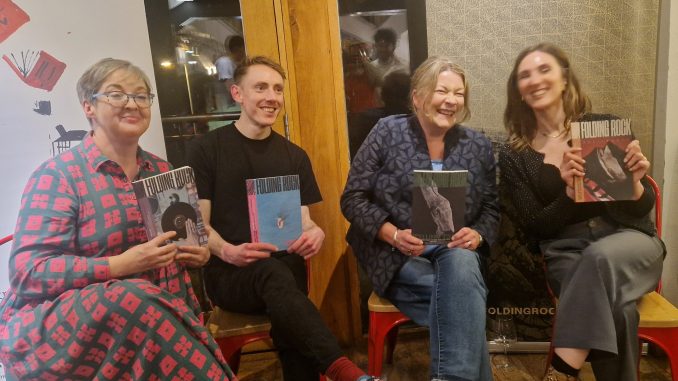
An evening celebrating and discussing the state of writing in Wales, with Folding Rock Magazine – and friends.
“The blackest thing about this book is the ink” Theolonious ‘Monk’ Elliot
The film American Author is a comedy which reflects on the state of ‘black literature’ in the USA. The above quote is from a scene where the lead character is berating a shop assistant in a bookshop because his novels are filed under ‘African American Studies’, purely because the book is written by a black man. The film goes on to explore what white people think ‘black literature’ is and their perception of what life is like being black in the USA today.
It highlights the convenience, inconvenience and inaccuracies of trying to pigeonhole literature. It also highlights the fact that this is a problem the world over.
What is ‘Welsh Literature’? Is it a book about Wales? Or is it a book written by someone who happens to be Welsh? Is a book set in Port Talbot a book about life in West Wales? Or about the struggles of working in a steel works that resonates with working class readers around the world?
Wales, as well as being the land of song, has a long, proud tradition of producing poets, authors and writers, but has always had to work that little bit harder for serious recognition.
On 15th October 2026, Wales celebrated its unique character and status as a devolved nation by, ironically, inviting the English monarch to the Senedd for the opening ceremony of the new parliamentary term. Wales’ national poet was commissioned to write a poem for the occasion. However, her poem was rejected for being too political for the establishment. I’m not sure what conclusions we can draw from that, but maybe there’s still work to be done when it comes to taking Welsh writing seriously within Wales itself.
That same autumn night, literature lovers made their way through the fog and drizzle of the Black Mountains to Bookish, an independent bookshop in Crickhowell that has been championing Welsh literature since it first opened its doors sixteen years ago. The venue was hosting an evening with Folding Rock Magazine, a new publication that promotes the best short fiction, creative non-fiction and literary criticism from Wales and beyond.
Since its founding in 2024 Folding Rock has produced five beautiful magazines, featuring one hundred writers from Wales. Each edition focuses on a theme, such as food, folk tales and communication.
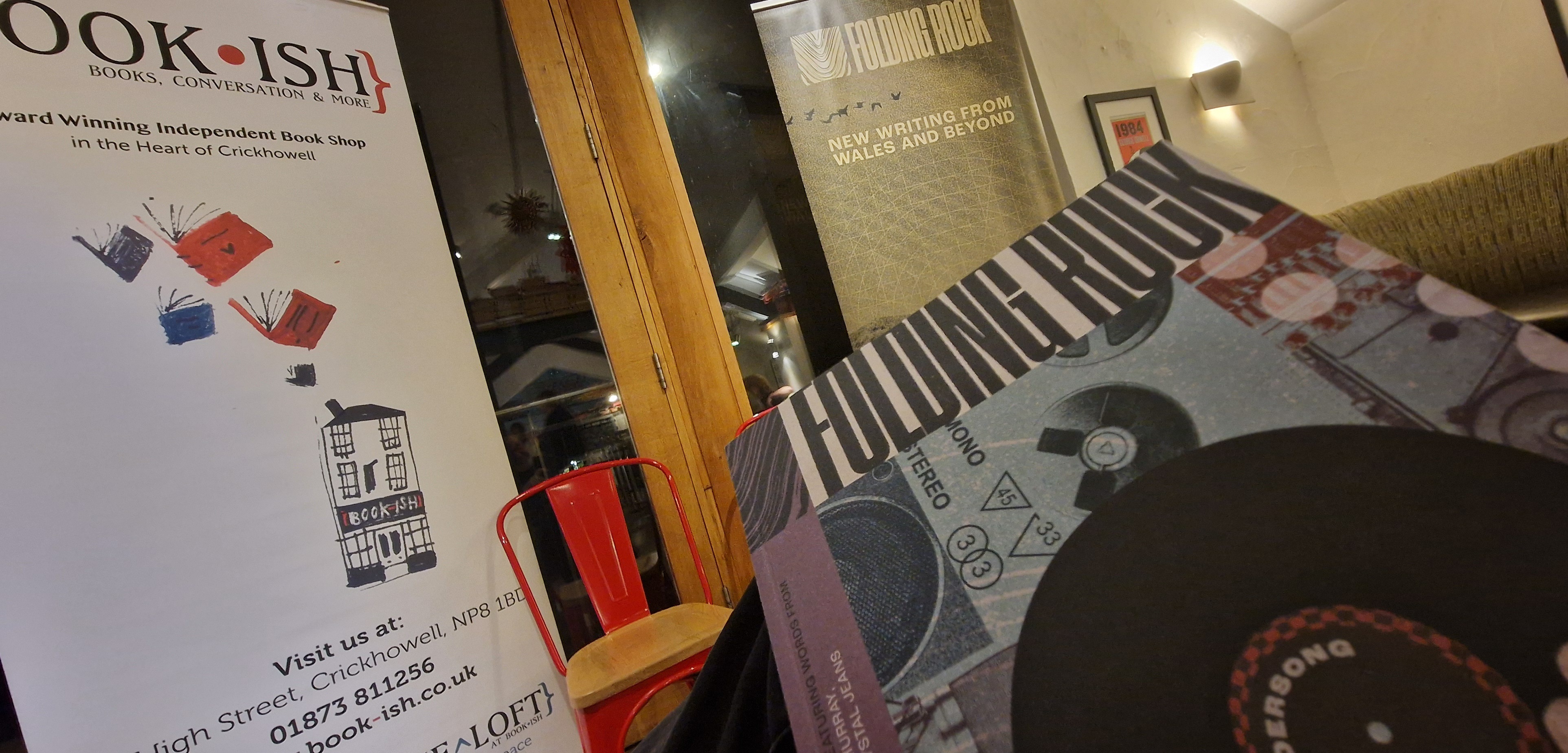
Tickets for the event included the option of a back issue of the magazine on arrival. Inevitably, my attention is drawn to issue three, ‘Undersong’, that runs with a music theme. My choice is made.
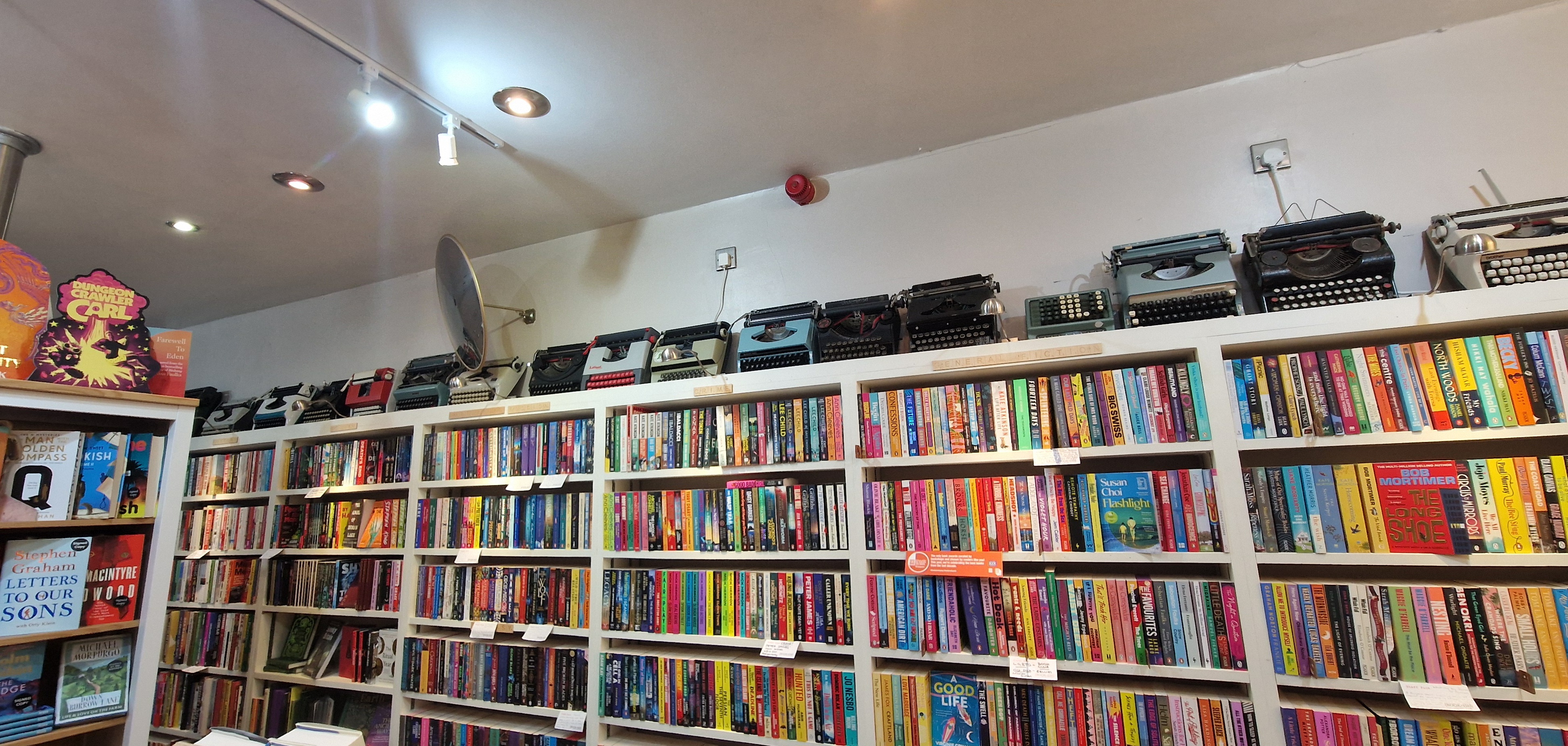
We make our way through this bibliophile’s paradise, underneath the display of typewriters, down to the cafe, then back up to the function room in the loft. We grab a complimentary drink and mingle our way to the front row.
The evening is introduced by Robert Harries and Kathryn Tann, co-publishers/editors of the magazine, who explain their motivation and ethos: a high quality voice for writers from Wales, in a format that would be worthy of a place on your bookshelf for years to come.
There are four panelists tonight: three of them contributors to one of Folding Rock’s back issues, one a contributor to the next issue, due out in November. The format of the evening is that the panelists will read some of their own work, then participate in a discussion about the current state of Welsh literature based on their own experiences.
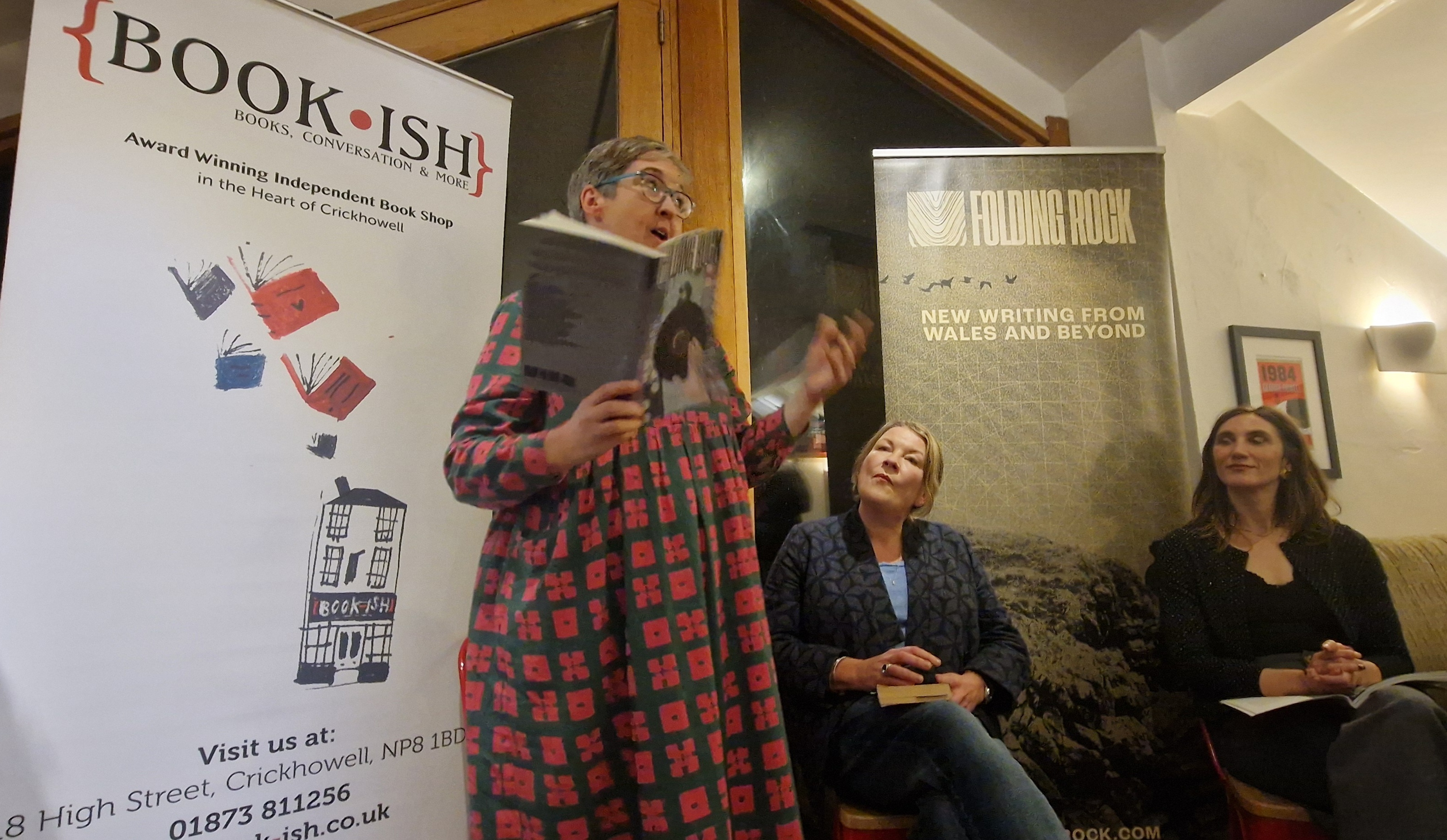
First up is Jude Rogers, music journalist and author – and the name that had attracted us to the event in the first place. Her 2022 memoir ‘The Sound of Being Human’ is a love letter to pop music and how it can shape us as we grow. Even though her taste in music is a little more mainstream than mine, and the obvious fact that I was never a teenage girl, her writing is engaging enough to draw me in and I felt an affinity with her all-encompassing love of music. Tonight, she reads her contribution to Folding Rock Number Three: a tale of going to see CMAT at Green Man Festival, just down the road from Bookish. Again, I’m not a fan of CMAT and I’ve never been a perimenopausal woman, but there’s enough in the story to engage me and I empathise with her story.
Next up was Lucie McKnight Hardy, the acclaimed Welsh author of ‘Water Shall Refuse Them’. She had contributed to Folding Rock Issue Four, ‘Telling Tales’ which focused on folklore – although tonight she read from her book, rather than the magazine. Whilst her tale is set in Wales, Lucie has an established following of folklore readers and has to a certain extent been able to break away from the ‘Welsh Writer’ label.
Silvia Rose is a writer from the mountains of Eryri. Her creative non-fiction, fiction and poetry explore themes of ancestry, travel and place. Tonight she read her contribution to Folding Rock Number Five, ‘Sustenance’, which focuses on food.
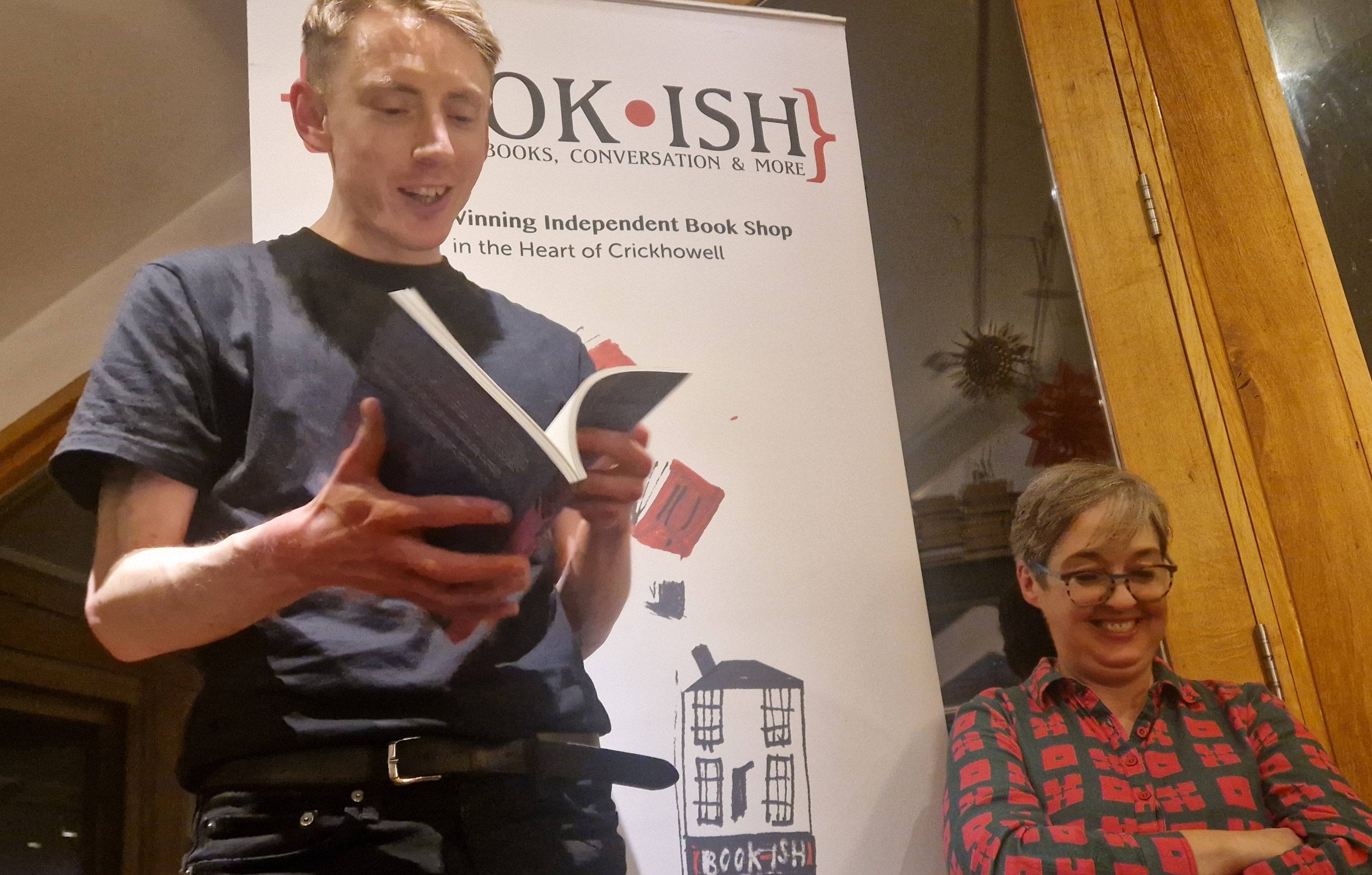
Finally, Jon Doyle read from the yet-to-be published Folding Rock Number Six, ‘Treigl’. His contribution is an extract from his as yet unpublished second novel. Jon is a writer based in Port Talbot, South Wales. He was part of Literature Wales’ Representing Wales scheme in 2022/23, and won the Writers & Artists Working-Class Writers’ Prize 2023. His debut novel ‘Communion’ won the Observer Debut Novel of the Year award – although he is keen not to rest his laurels and dwell on his past work and is keen to avoid being compared to other similar authors.
Jude then leads a conversation that touches on the health of Welsh literature, the support available, the challenges and the sustainability of ‘the scene’.
Several of the panelists talk of how they didn’t realise how ‘Welsh’ they were until they spent time in England. The publishing world is incredibly London-centric (as are many aspects of UK life). Jon tells how he felt frustration when one publisher had told him they had already published one ‘Welsh novel’ that year and weren’t looking for another one – although he felt his story was much broader than a story about Wales.
Jude also recalled writing an article about The Manic Street Preachers, one of the biggest bands on the planet, for a national broadsheet and they ran the article with an incredibly clichéd photograph of a man eating a daffodil. There was a widely held belief among the panelists that our Celtic cousins in Scotland and Ireland probably get taken more seriously and don’t have to deal with such lazy stereotyping.
Within Wales, there is a lot of support for writers and everyone agreed that writers in Wales ‘collaborate’ with the Welsh publishing industry rather than ‘conform’ to what is expected from a ‘Welsh’ writer. There was talk of Arts Council support which is helpful, but Wales is well behind the support artists of all shades get in Ireland. This very week Ireland has announced a basic income scheme for artists.
Aside from government support, bookshops like Bookish are an essential part of the Welsh literature ecosystem. With Hay-On-Wye the obvious exception to the rule, there are very few independent bookshops in South Wales, but the current situation is healthier than it has been for some time.
Just like vinyl, CDs, cassettes and fanzines, books are back. The novelty convenience of everything being digital is wearing off and people are returning to books and sales are up (unless you’re Sally Rooney). Indeed, this week the government has been talking about reducing screen time for kids in schools.
As I sit here, in between blogging, coffee and biscuits, I’m reading issue three of Folding Rock. There’s an article about three bands ploughing forward creating new sounds in Wales. Whilst there has always been, and always will be, bands that explore well-trodden paths to rock’n’roll fame and glory, Wales has never been afraid of being outsiders and weirdos – always keen to tread the path less travelled. Something original and not conforming to what other people think Welsh art should be.
The same can be said across Welsh culture, from music, comedy, cinema, sculpture and football through to poetry and literature. And art created for the sake of art, tends to be more interesting and original than art following trends. It may not always have the commercial success, but it will always stand the test of time. We think that Folding Rock will achieve their aim of being something physical to sit with pride on bookshelves and to be held in your hand for years to come. A snapshot of contemporary Welsh literature, hopefully signposting readers to discover more work by the artists featured. But also documenting the literature of Wales today, for future generations to look back on. And dare I say it, be influenced by.