Celebrating Becks’ seventieth birthday by not seeing him at all.
Here’s some travel info you won’t find in any other guide book. The days in Kazakhstan are longer than the UK. I don’t mean they are longer than twenty-four hours, I mean more daylight. It’s all to do with the way the earth tilts on its axis. Add on the fact that it’s much hotter here and you have a situation where at 6am, the sun is like the search light of an ICE helicopter illuminating a dawn raid.
I’ve always thought that time zones are based on the number of degrees of the longitudes a place is from the Greenwich Meridian. I think that’s probably how it should work, but it turns out that’s not how some countries see it. As mentioned in previous blogs, Kazakhstan is big. Really big. It used to be spread across four timezones. But at some point during the Soviet Union, it was decided to simplify it and cut it down to two timezones. And to complicate matters, they are based on a random line drawn by some aparacthick, rather than the positioning of the sun. So this means that sunrise and sunset don’t necessarily occur at the same time as they would back home at a similar time of year. Here in Almaty it gets light earlier, but it also gets dark earlier.
For info, Almaty and Astana are in the same timezone.
We woke up early, blinded by the sun, but memories of the heat prompted us to not rush to go out. Then we had a message about Becks’ having birthday presents delivered by ‘ladies of ill-repute’, so we decided to wait till we stopped laughing before we went out.
And so it was, we went out at four of the PMs. Google (other tax-avoiding search engines are available) told us there is a Museum of Almaty around the corner. Although Google Maps tried to take us on a walk through the changing rooms of the stadium next to our apartment. Not that clever Google geeks.
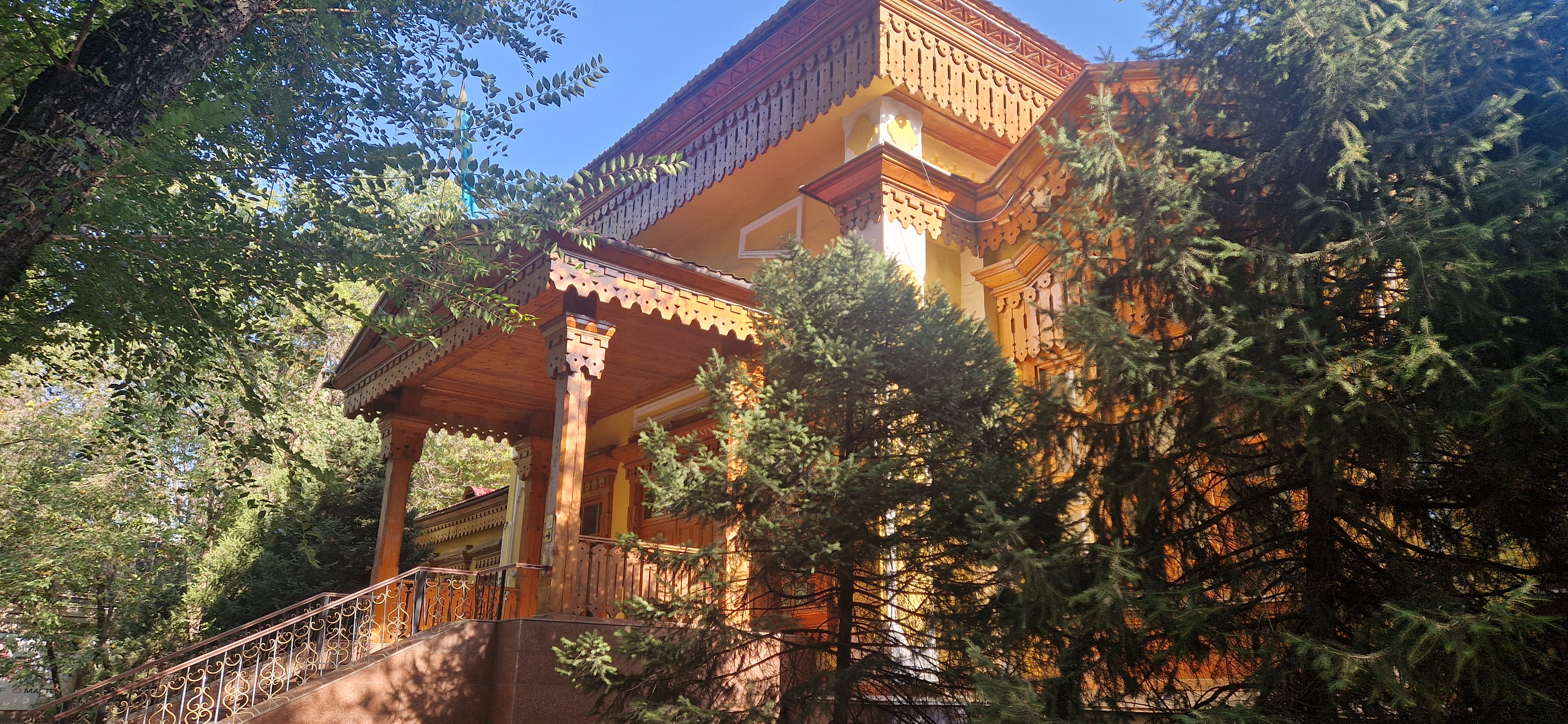
It’s a splendid looking building, although it looked closed. Megan pulled at the door and was pleased to find it open. I’m guessing the door was closed to maximise the efficiency of the air-conditioning.
It cost around £1.50 each to get in and we thoroughly recommend it. We were the only visitors in the whole building, but it was well staffed.
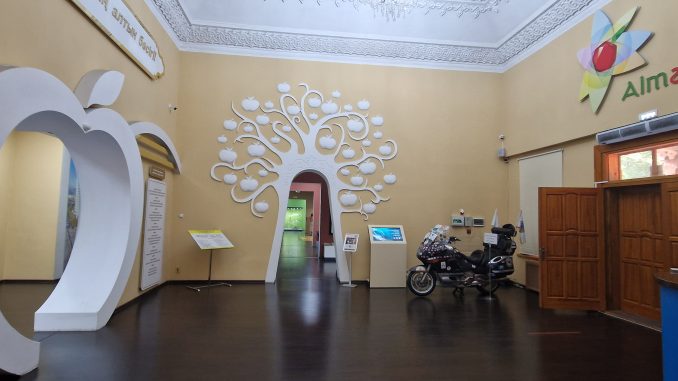
It’s a thoroughly modern museum, including artifacts and interactive digital displays.
The museum exposition includes more than 40,000 exhibits, divided into 11 eras: “The Ancient History of Almaty”, “The Medieval History of Almaty”, “At the Origin of Kazakh Statehood”, “Ethnography of Zhetysu”, “Vernensky Period of Almaty History”, “Almaty in the 20th Century”, “Development of Culture and Art”, “History of Mountaineering”, “Zheltoksan”, “Almaty and the Leader of a Nation”, “Model of Peace and Harmony” Wikipedia
We spend a fascinating hour looking around the exhibits. I find it tragic that so many people know so little about one of the biggest countries in the world. And that is mainly down to its subjugation by the Soviet Union. If anyone thinks of the country they tend to think of the appalling Borat, who is totally unrepresentative of the country, not to mention offensive. Failing that they think of the Soviet Union.
But the country has a long history going back thousands of years. There aren’t any ancient cities because it is a harsh landscape that nobody would want to, or be able to, build a city in. Most of the population were nomadic, not really bothered about building permanent homes anyway.
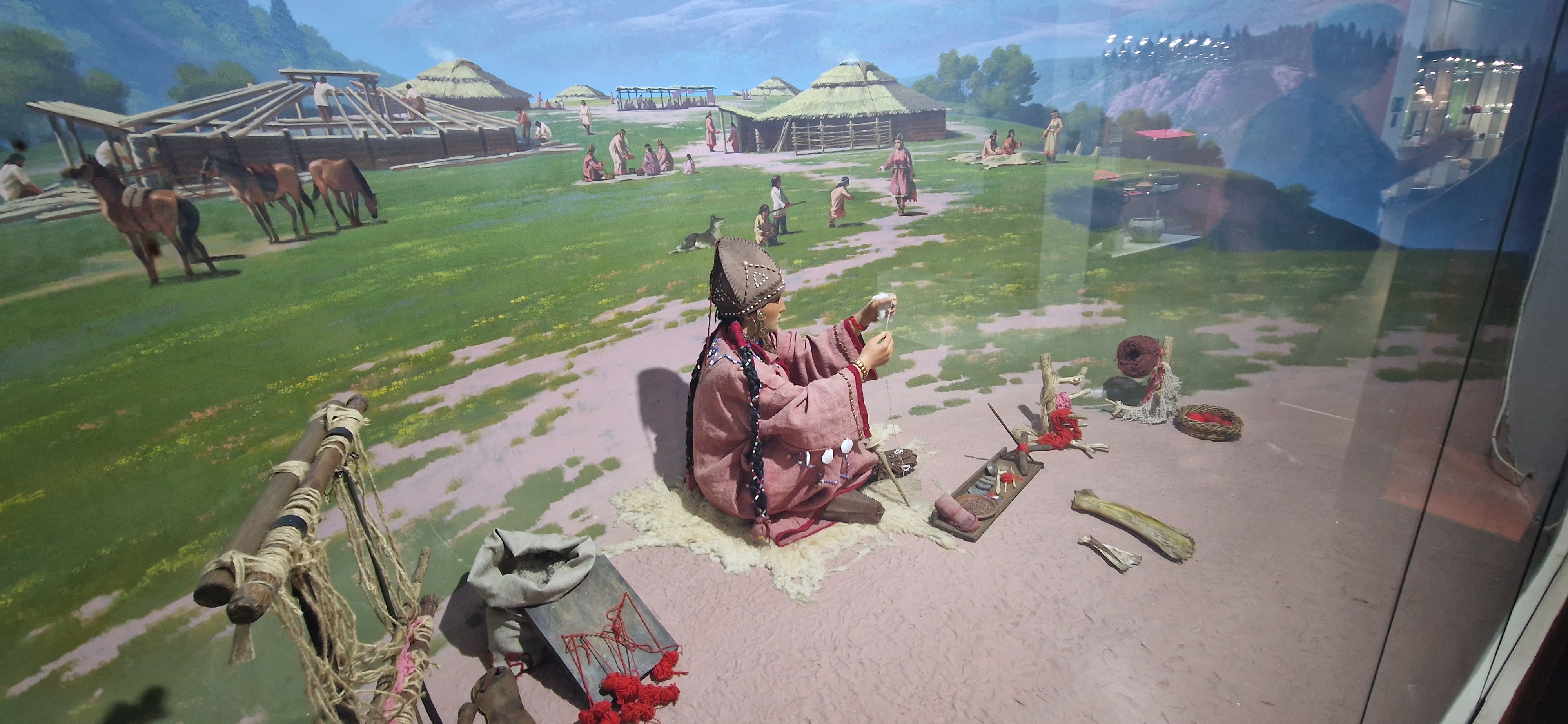
The Botai, who inhabited the land from 3700 BC to 3100 BC are credited with being the first people in the world to domesticate horses.
Today, the borders of most countries are mostly set in stone and have been for a very long time. But not quite all countries. Who knows what the borders of Ukraine and Israel will look like in ten years? However, back when Methusela was a boy, Noah was still studying his acorn to see if it was going to rain and JC was just a twinkle in God’s eye, borders weren’t really a thing.
Dudes used to just run rampage all over the shop and bagsy shit until they got bored, their main man croaked, or bigger boys came and took it off them.
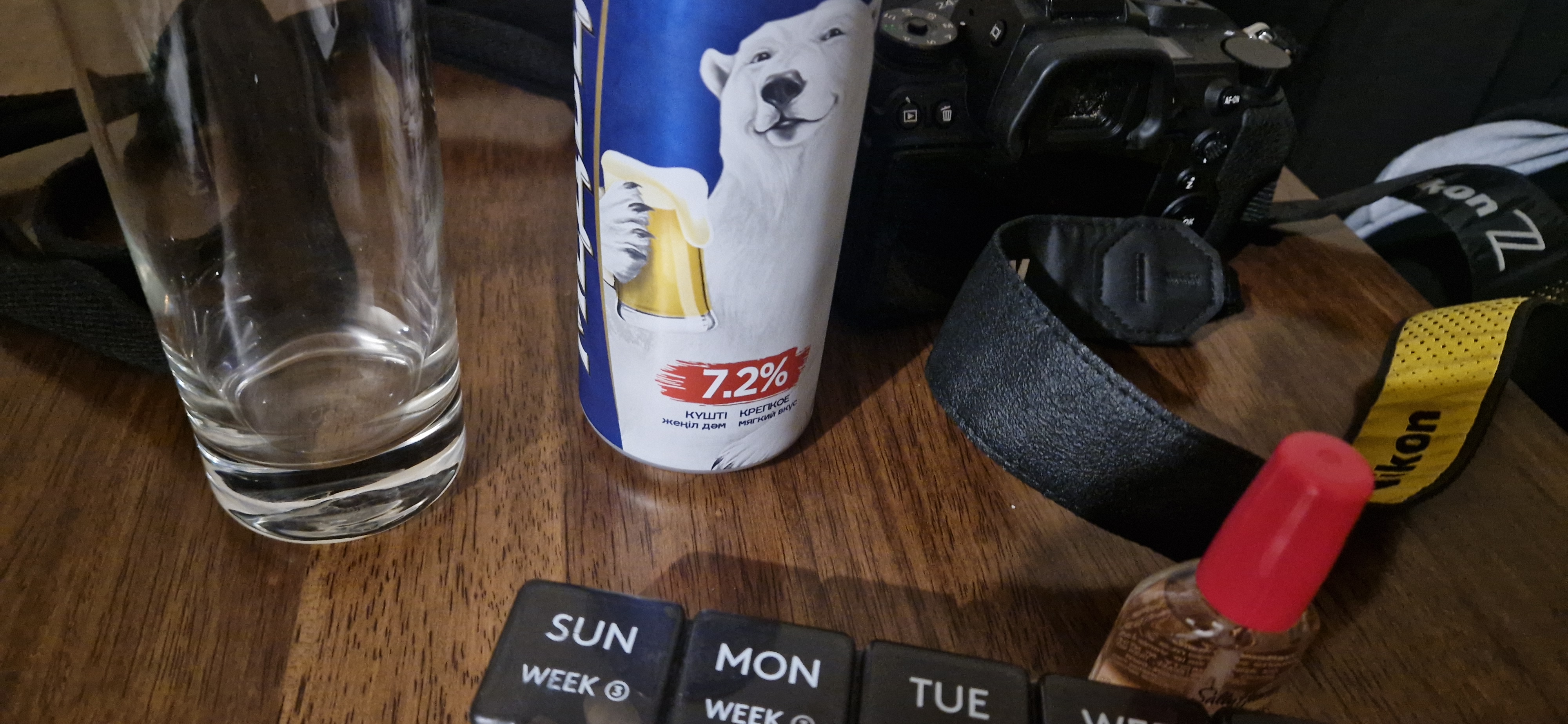
I’m sat in the apartment at the moment drinking 7.2% Kazakh booze while I write this, so don’t reference this blog in your dissertation for your history degree. I don’t even know if I’m drinking lager or beer.
But anyway, Ghengis Khan, Attila the Hun, The Samaritans (the tribe, not the sandal wearing dudes that talk you out of jumping), Iranians, The Saka Massagetae (no, me neither), The Persians, The Turks and the Scythians all rode in with their chests all puffed out acting all hard, then fucked off when they realised there’s not a lot here. The locals just shrugged their shoulders and said “We told you so” and carried on riding horses, drinking horse milk and growing apples.
I’ve read several different accounts connecting the aforementioned Scythians to King Arthur. Scott Littleton suggests that the Stories of King Arthur are based on Kazakh folk tales, rather than Celtic myths. Whilst another version was that Roman Commander Marcus Aurelius took a legion of Scythians up to try to sort out the Scots. A Cetic variation of Aurelius is Artyr. And so we get the inspiration for Arthur. Or something like that. Don’t quote me.
The first time a border resembling the current Kazakhstan started to form was in 1465, I think it was a Tuesday, when the remnants of the Mongol Golden Horde were pushed to one side and The Kazakh Kahnate set up shop.
Between 1465 and 1847, the country was led by twenty-one different blokes called Khan.
FUNFACT: Ghengis Khan was a bit of a boy. He fathered hundreds of children (with many different women obviously). Descendants of Genghis Khan are both through the lineage of his sons and through a unique Y-chromosome lineage found in about 16 million men today, representing 0.5% of the world’s male population. While direct bloodline descent is common for many Mongolians and other peoples of the former empire, the widespread Y-chromosome points to a widespread cultural and genetic legacy of Genghis Khan and his male descendants.
The Kazakh Kahnate remained in place until it was absorbed into the Soviet Union, although the Russian Empire had been bossing them about for a century or so before that.
Much of this history is recorded for posterity in The Almaty Museum. It’s a thoroughly modern facility.
I like the warrior outfits on display and the Belarusian TV / Recotd Player combo best.
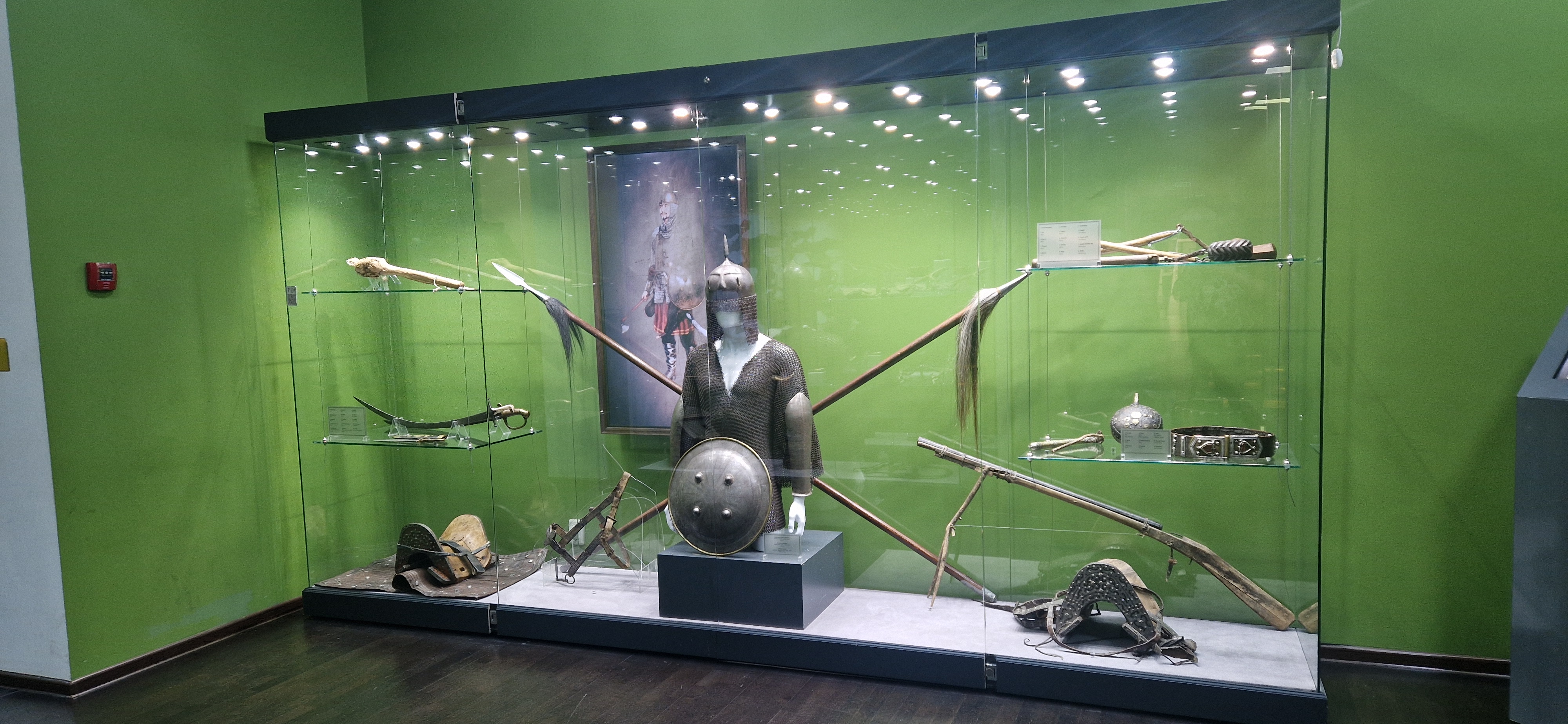
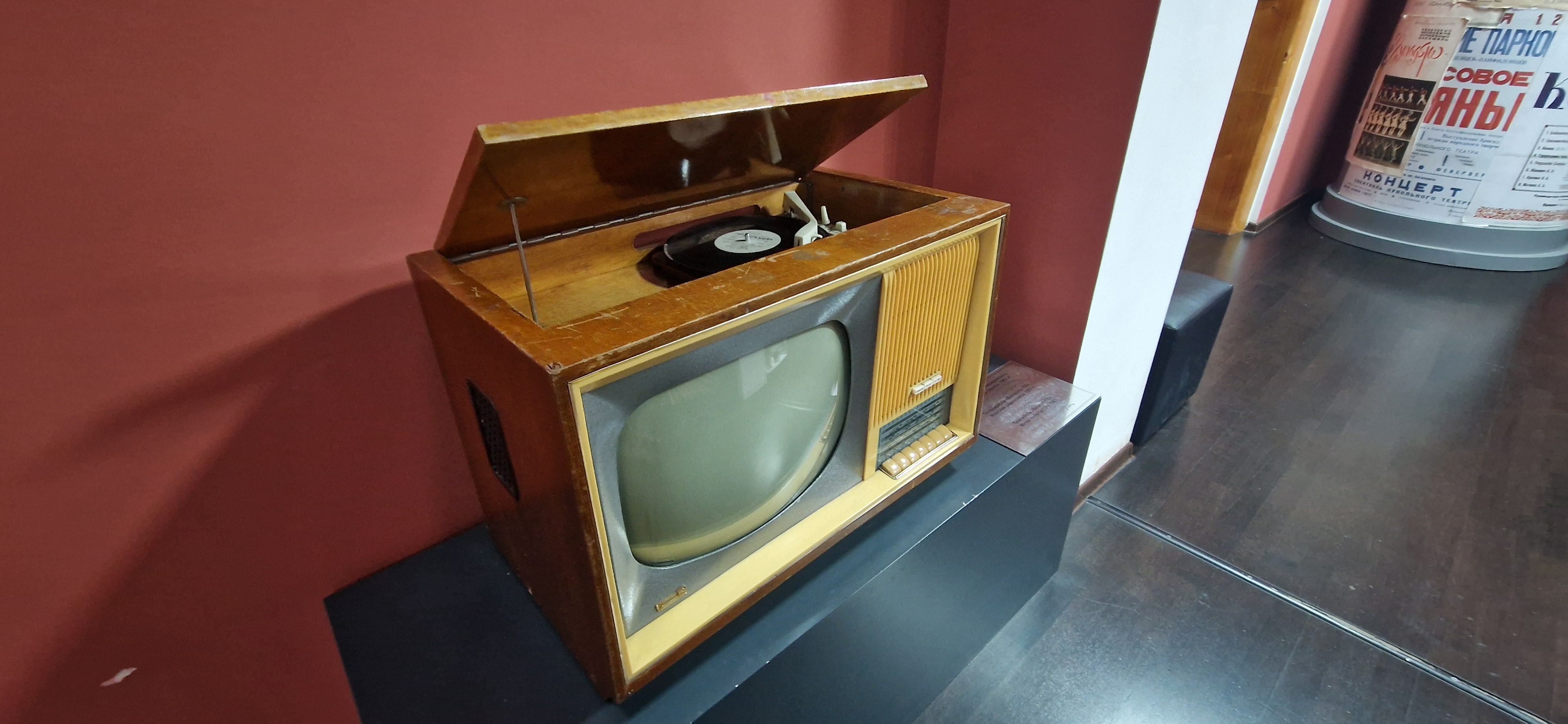
Megan’s favourite bit was standing in front of the air conditioning unit.

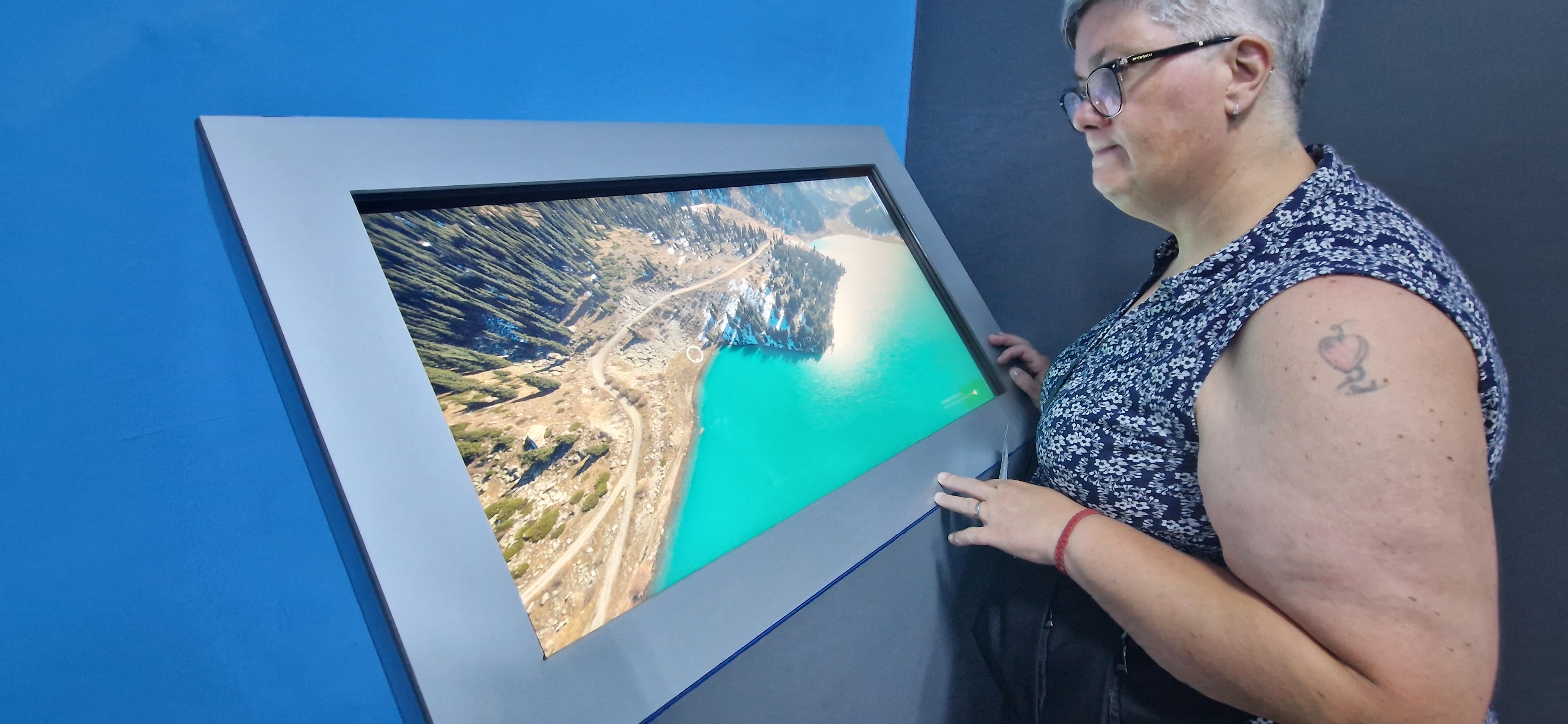
There’s an interactive display board that highlights some of the things worth going to see around the city. I think it’s fair to say it is a big city and on reflection the idea that we could see it all in one walking tour was as naive as it was ambitious. We start hatching plans for the rest of our stay.
Museum done, we head back to the Munich Bar and overindulge, before heading back to the apartment.
Tomorrow we really are going skiing. Watch this space.