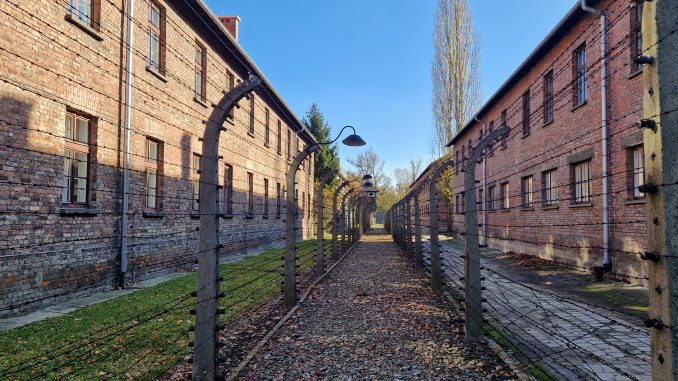
Today we did what must be the least ‘fun’ thing you can do on holiday, but equally a ‘must do’ trip: a visit to Auschwitz-Birkenau, the Nazi concentration camp.
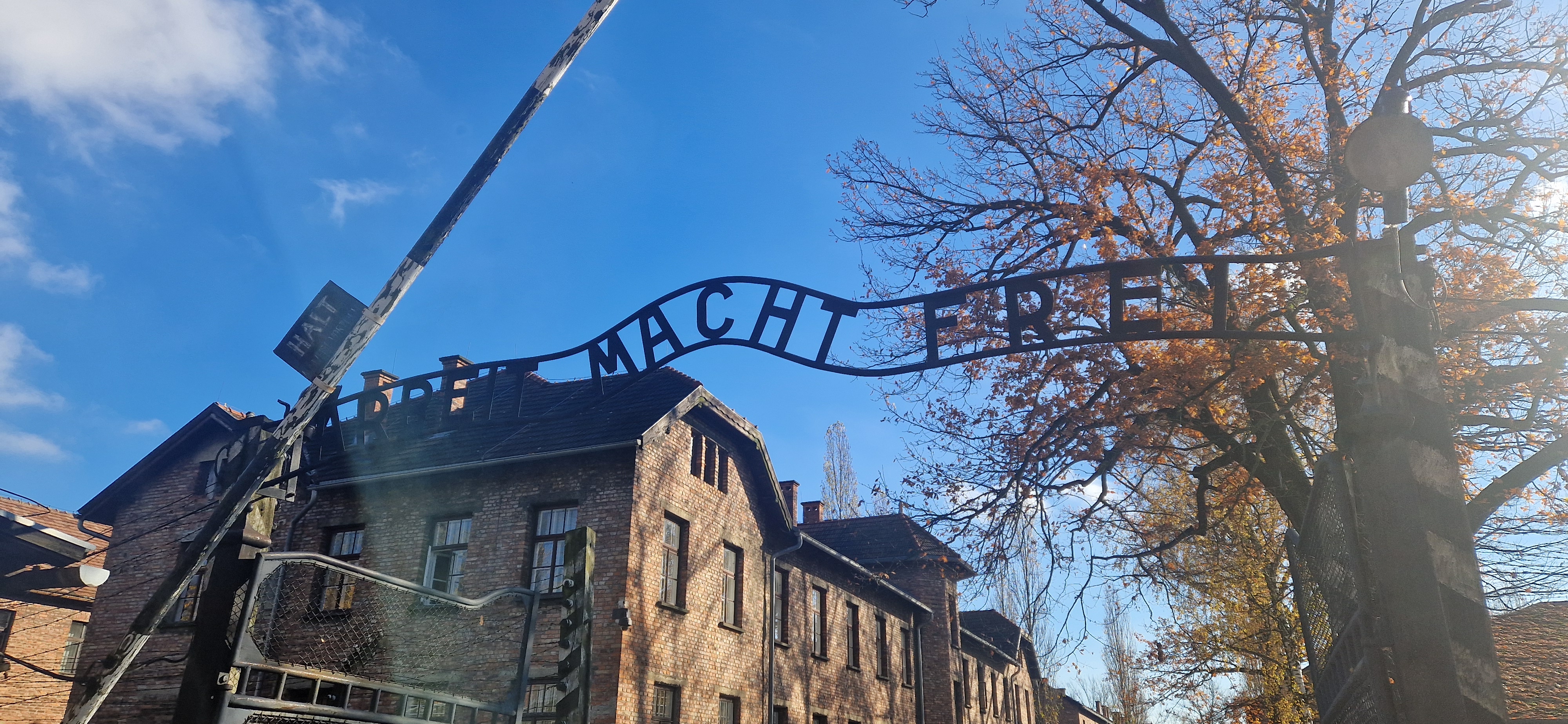
What went on in Auschwitz-Birkenau between 1939 and 1945 can easily be regarded as the most inhumane and horrific act of the twentieth century. Quite possibly the most horrific act in all of human history.
Adolf Hitler had already decided that Jews and Communists were undesirables after the First World War, blaming them for the defeat of Germany.
“The ultimate goal must definitely be the removal of the Jews altogether.” Adolf Hitler: 1919
As his expansion of Germany began in 1939, with the invasion of Poland, he was already considering how to deal with ‘The Jewish Question’. What would become the Holocaust began slowly. It wasn’t the planned industrial murder we think of today. In Lithuania thousands of Jews were rounded up, taken to the woods and shot. This was very time consuming though and they started experimenting with different methods, including boiling them alive. As Germany rolled through Europe, the Holocaust picked up pace in a very short space of time. Concentration camps and hard labour camps sprang up across occupied territories.
Auschwitz had originally been a Polish army barracks. The buildings were repurposed to become a prison for the ever-expanding population of ‘undesirables’ who were being locked up by the Nazis.
Conditions in the camp were appalling: overcrowded, unsanitary, and brutal. The prisoners were considered to be subhuman and treated worse than animals. Medical experiments were carried out on inmates, sadistic punishments were handed out, and many were forced to carry out hard labour. Thousands died of exhaustion, starvation or illness. Those that weren’t fit enough for hard labour were simply killed. But such were the numbers involved, more ‘efficient’ methods of murder were developed, with Zyclon B gas eventually being the chosen method.
People were told to strip and number their belongings so they could find them after having a shower, then taken to a sealed room and gassed.
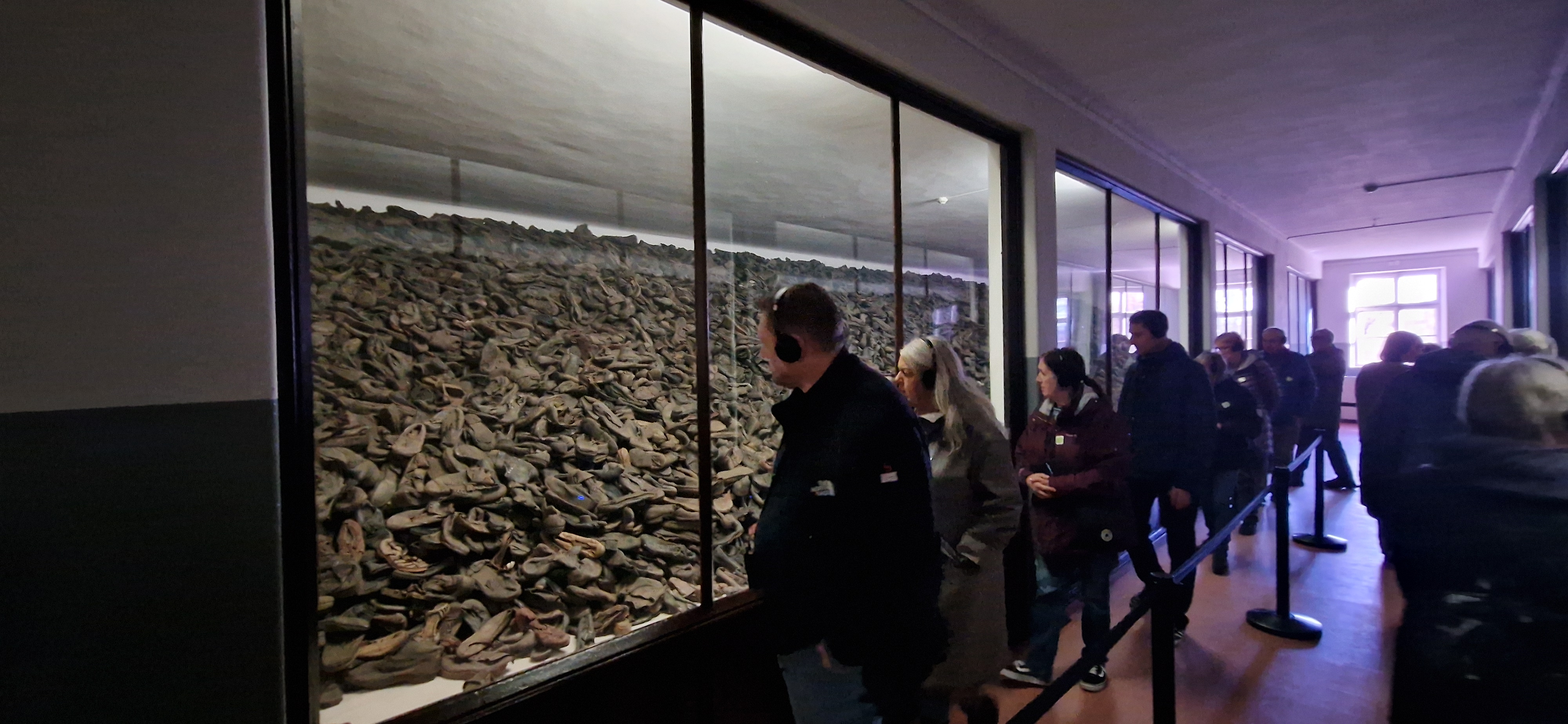
Throughout the museum there are exhibits of the conditions people lived in, displays of some of the personal belongings of the victims and photographs of some of the prisoners. It’s a sobering walk through the exhibits. There’s a huge pile of human hair. The Nazis used to shave prisoners and weave their hair into carpets. The one that gets a lump in everyone’s throat is the huge pile of children’s shoes. Children were not spared by the Nazis. Indeed they considered it important to kill the children: they were, after all, the next generation of a people the Nazis wanted to eradicate.
Eventually Auschwitz became too small to cope, so a second camp was built, this time from scratch, just down the road. Auschwitz II-Birkenau. Here the murders took on a truly epic scale.
The two sites are a few miles apart. If you go on an organised tour you will have a tour guide walk you through the first site, which very much feels like a museum. The last thing you get to see is a gallows erected after the war for the last person to be killed at the camp. The camp commander, Rudolf Hoss, was tried and convicted in Poland and hanged next to the gas chambers on 16th April 1947.
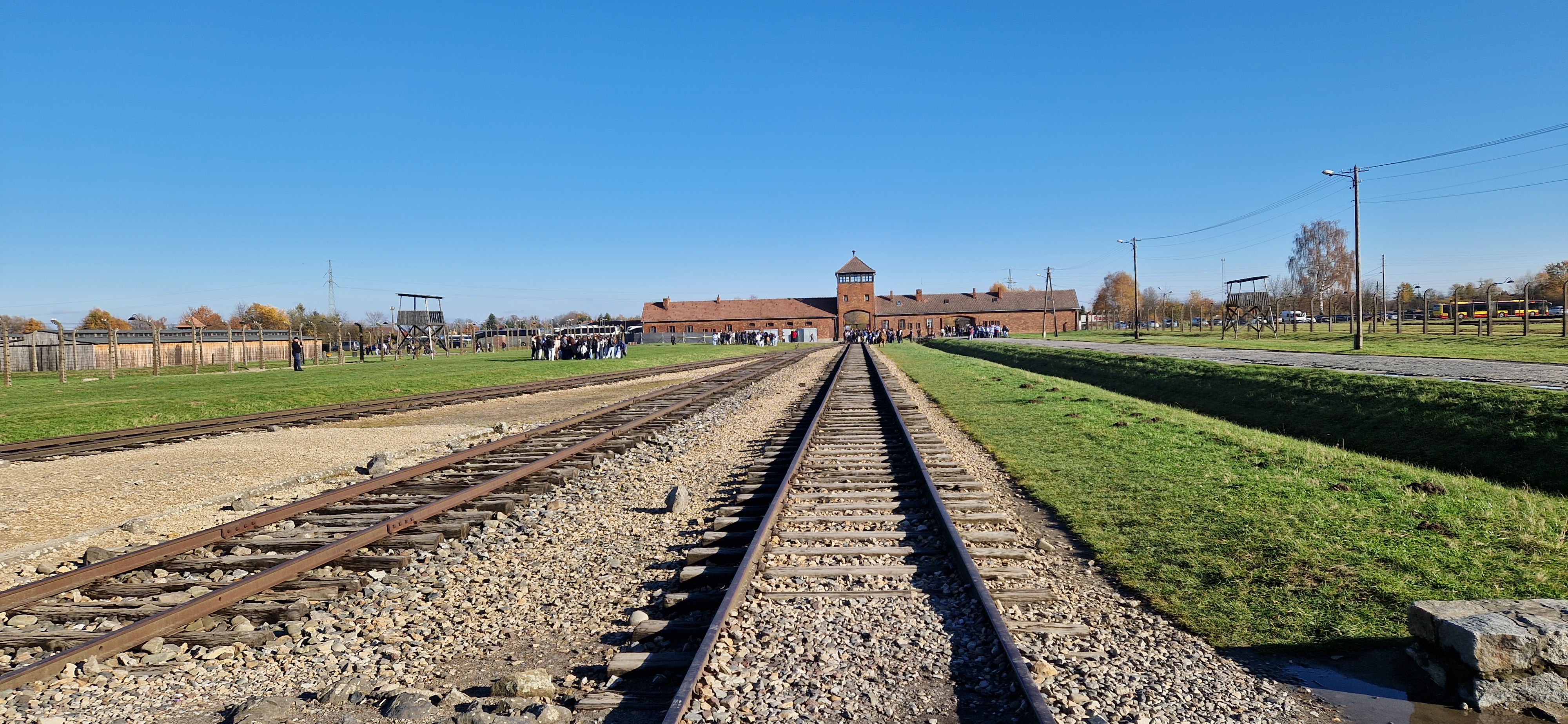
After a short break there’s a bus ride to the second camp which is less exhibitions, more the camp as it was, for you to try to grasp the enormity of this crime against humanity. Railway cattle trucks brought people directly into the camp where they would be examined by a doctor. Those fit enough for hard labour would be housed in blocks with up to seven hundred people crammed into one dormitory with no sanitation.
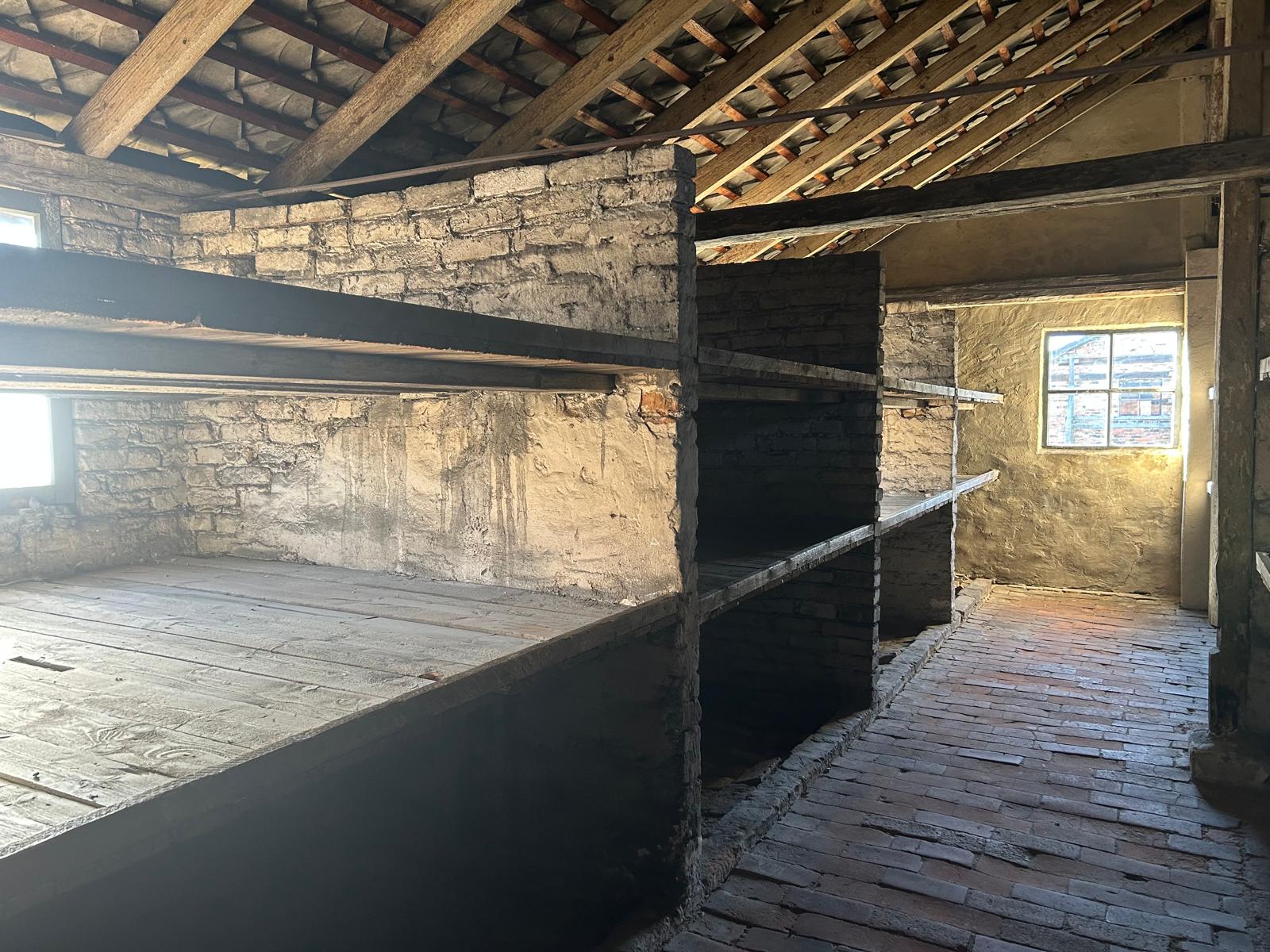
Those not suitable for hard labour would be killed, often the same day as they arrived at the camp.
When it became clear that Germany was going to lose the war, the SS started to destroy much of the evidence by blowing up the gas chambers and crematoriums, but enough of it is left for visitors to be able to try to comprehend the sheer scale of the inhumanity of it.
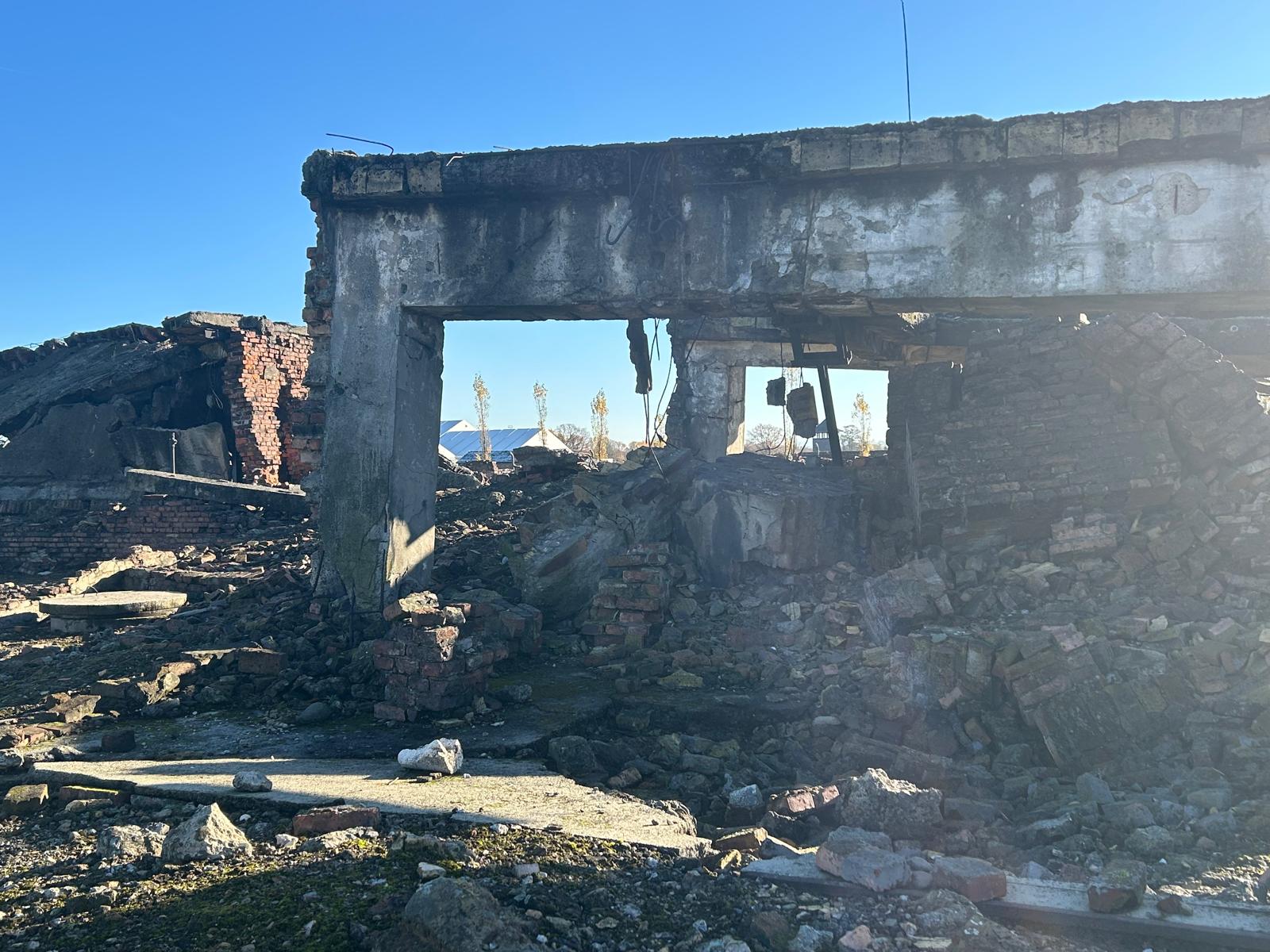
Historians estimate that around 1,1 million people perished in Auschwitz during the less than 5 years of its existence. The majority, around 1 million people, were Jews. The second most numerous group, some 70 thousand, was the Poles, and the third most numerous, about 21 thousand, the Roma and Sinti. About 15 thousand Soviet POWs and some 12 thousand prisoners of other ethnic backgrounds (including Czechs, Belorussians, Yugoslavians, French, Germans, and Austrians) also died there.
As we walk around the site there is a ceremonial wreath laying to mark the anniversary of Kristallnacht, which took place 9th and 10th November 1938, when Nazis attacked the properties of Jews throughout Germany, including smashing shop windows (night of the crystal smashing).
The reason that Auschwitz-Birkenau is open to the public and is such a major attraction is the historical importance of these events. Lessons must be learned and events like this should never be repeated. But the only lesson we can truly learn from history is that we never learn from history. Dehumanising of ‘undesirables’, nationalism and xenophobia are on the rise again throughout the world . We are even seeing genocide being repeated, albeit without the clinical death camps, by people who really should know better.
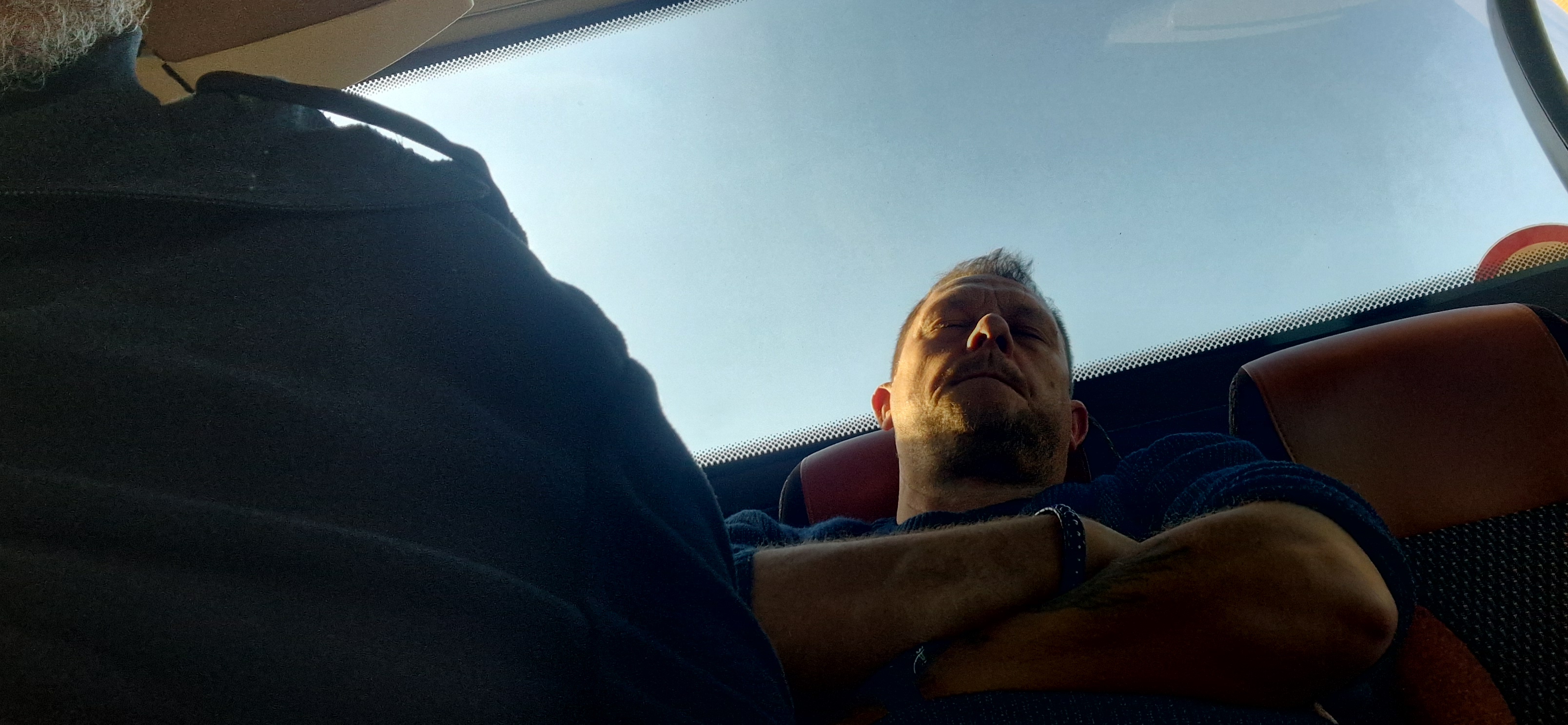
As we head back to town the bus is quiet and contemplative. The perfect opportunity for Bob Hoskins to get some more snoring in.
When we are dropped off, we head straight for our regular pub over the road for local beers and smoked cheese. We contemplate eating there but Bob Hoskins had ordered a hot dog the night before and was appalled to find it uncooked. Apparently you have to cook it yourself. So after several beers we head out foraging for food.
It soon became clear that a group of ten people are unlikely to find a restaurant that they all like. Phrases like ‘I fancy a steak’, ‘I need something vegetarian’ and ‘I dont like curry’ were muttered before we decided to split up.
We headed down to the Doon Indian restaurant. They had an amazing menu, but we managed to baffle the chef with requests like, ‘can I have a chicken buna but with cheese instead of chicken’, ‘can I have a mild vindaloo’ and ‘can I have half chips and half fries?’
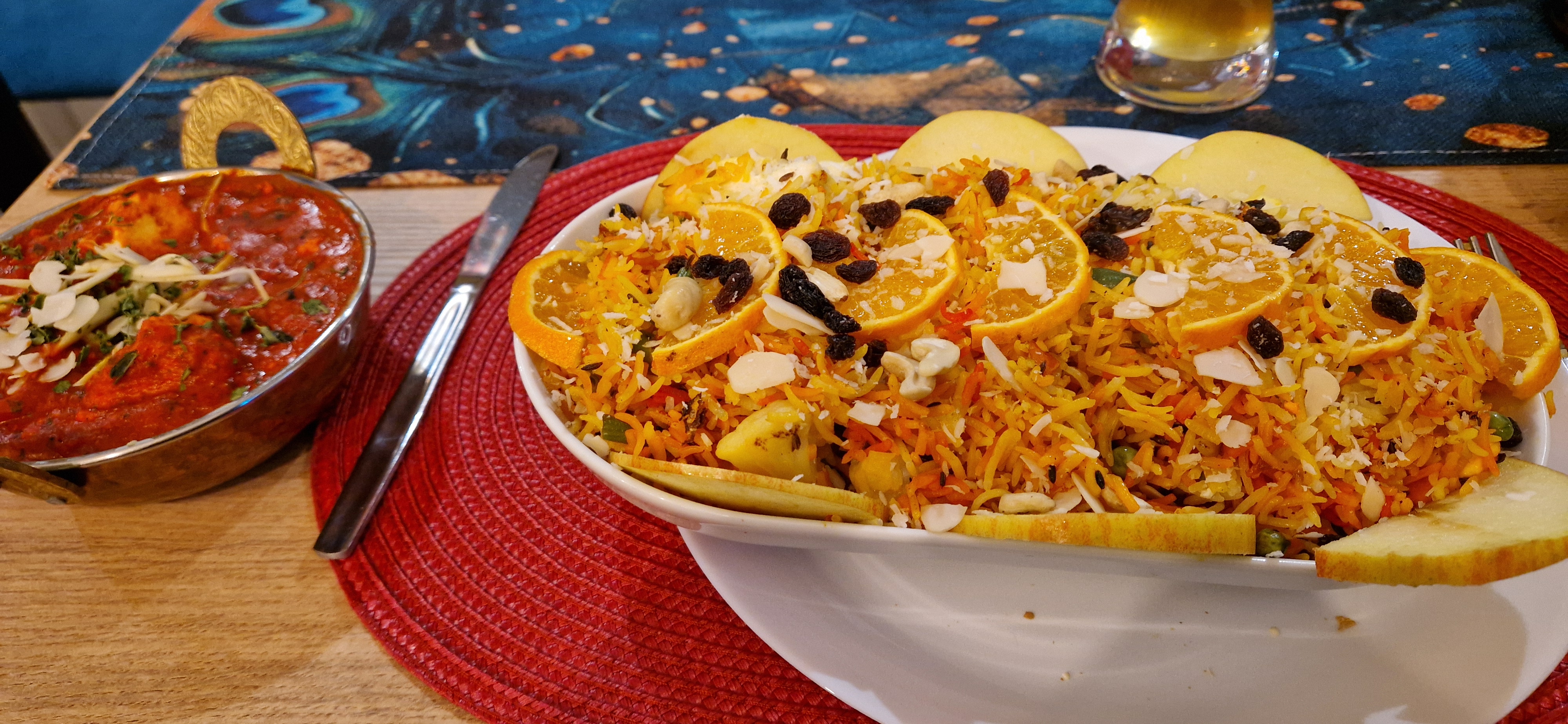
The waiter took it all in his stride and we were soon feasting on a rather splendid selection of curries, washed down by local beers. We managed, or rather I managed, to make paying the bill far more complicated than it needed to be, but we were soon heading out into the night leaving the waiter relieved, but heavily tipped.
Mark decided he wanted to check out a sports bar he had spotted so he could watch Liverpool V Real Madrid. So we did. We didn’t watch much of the football though, we spent most of the time picking our jaws off the floor in shock at the prices . £34 for two single gin snd tonics. It turns out the sports bar is attached to the Sheriton Hotel, a chain renowned for not being a budget hotel.
Needless to say, we only had one drink, then headed back to our local to drunkenly make unrealistic plans for the amount of sightseeing we would be doing on day four.