
Day trip out to the legendary Wieliczja Salt Mine.
Wieliczja Salt Mine is a bit like Blaenavon Big Pit, but with less coal and more WiFi.
Back in the day, before fish and chips, salted caramel ice cream and tequila, there were other uses for salt and it was an incredibly valuable commodity. Before fridges, salt was used for preserving meat and fish, as well as tanning leather, creating dyes and as a component in certain medicines. In some countries it was used as money, Roman soldiers were paid in salt.
The salt in Wieliczja Salt Mine is fourteen million years old and dates back to when the Paratethys Sea disappeared due to our old friend climate change. It has since been topped up with the evaporated sweat and tears of tourists going down the eight hundred and fifty steps to get to the bottom of the mine.
They first started extracting salt in neolithic times, but got serious about around seven-hundred years ago. As you can imagine, in the early years, the mine was a bit on the primitive side, but you only get a hint of that today. If you have been down Big Pit in Blaenavon you will know that you are literally walking through the mine as it was – running water, low seams, bumping heads, the works. Wieliczja Salt Mine is not like that: thoroughly modernised tunnels lined with wood to stop the village above landing on your head.
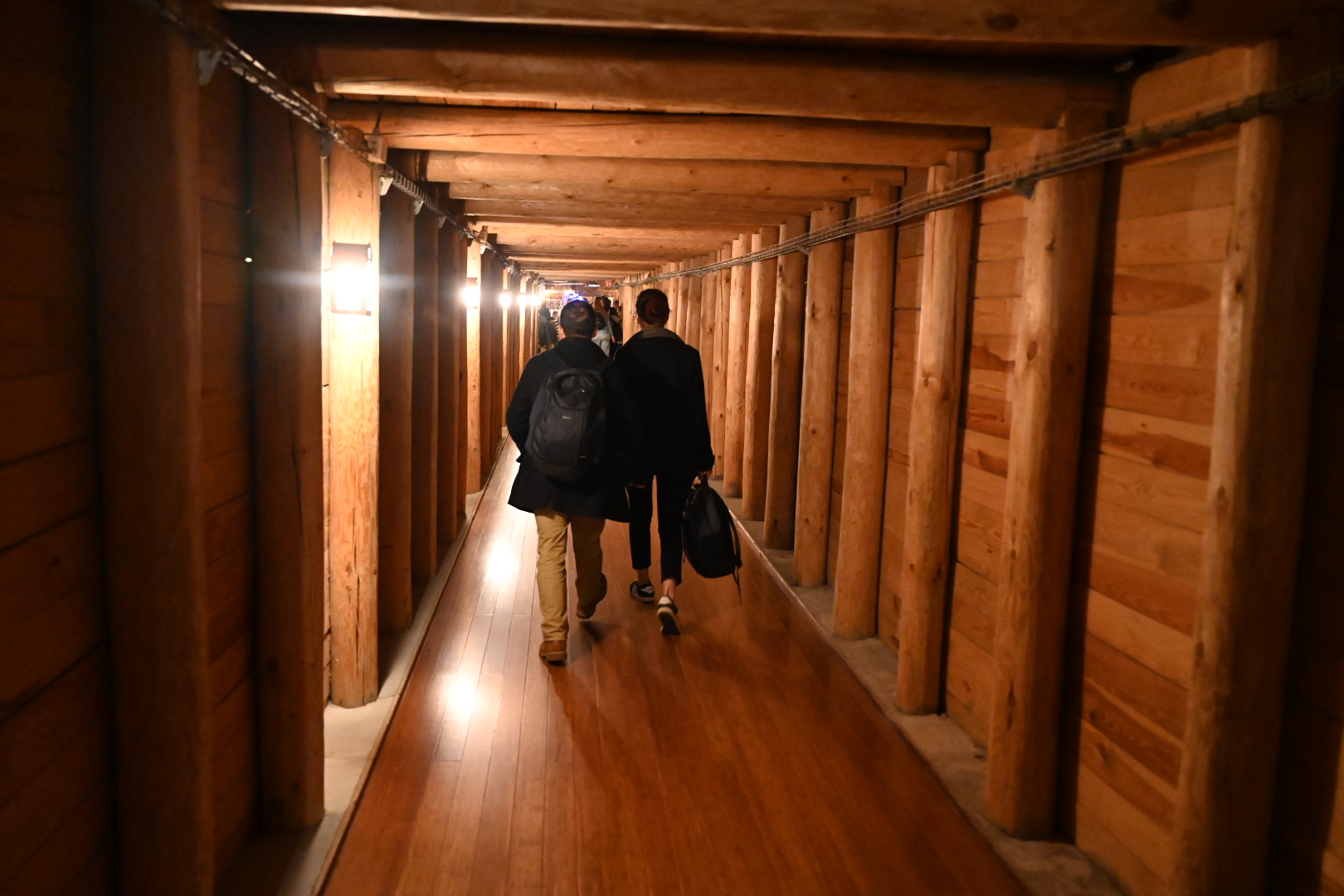
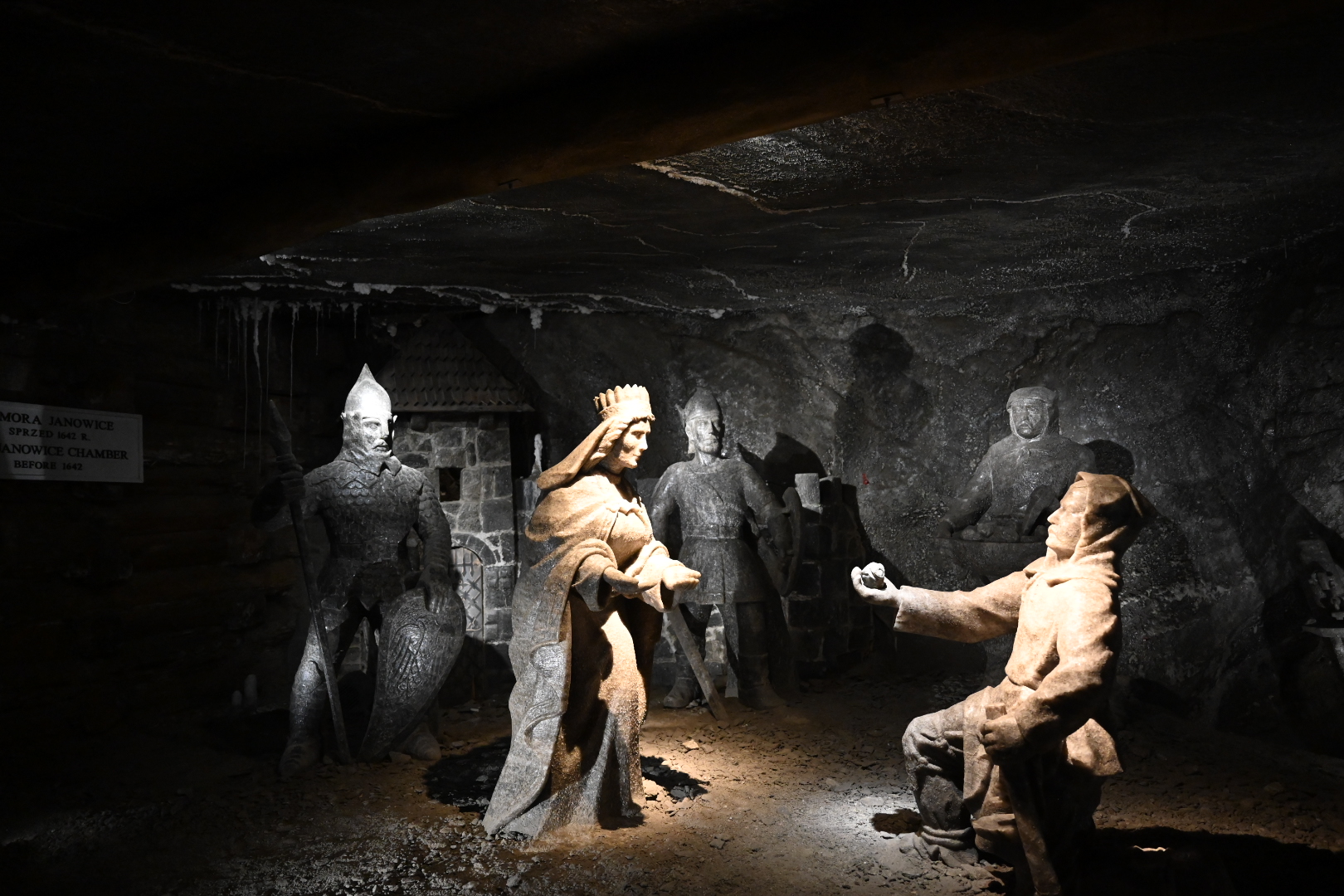
Occasionally there are exposed sections of the old mine to reveal ancient extraction and haulage methods, or statues that the workers carved into the salt.
QUOTE OF THE DAY: It’s not as big as I thought. Ah, hold on, it’s underground isn’t it. Salty Sally, as we pulled into the car park
Salt was continuously mined from the thirteenth century right up until 1996. It is estimated that ninety percent of the salt in the ‘seam’ was extracted over that period.
During World War Two the Nazis sent many Jews to work down the mine as ‘hard labour’.
The big attractions are the churches that the workers carved into the salt over the centuries. There are forty of them in total, but the ‘tourist’ route doesn’t take them all in.
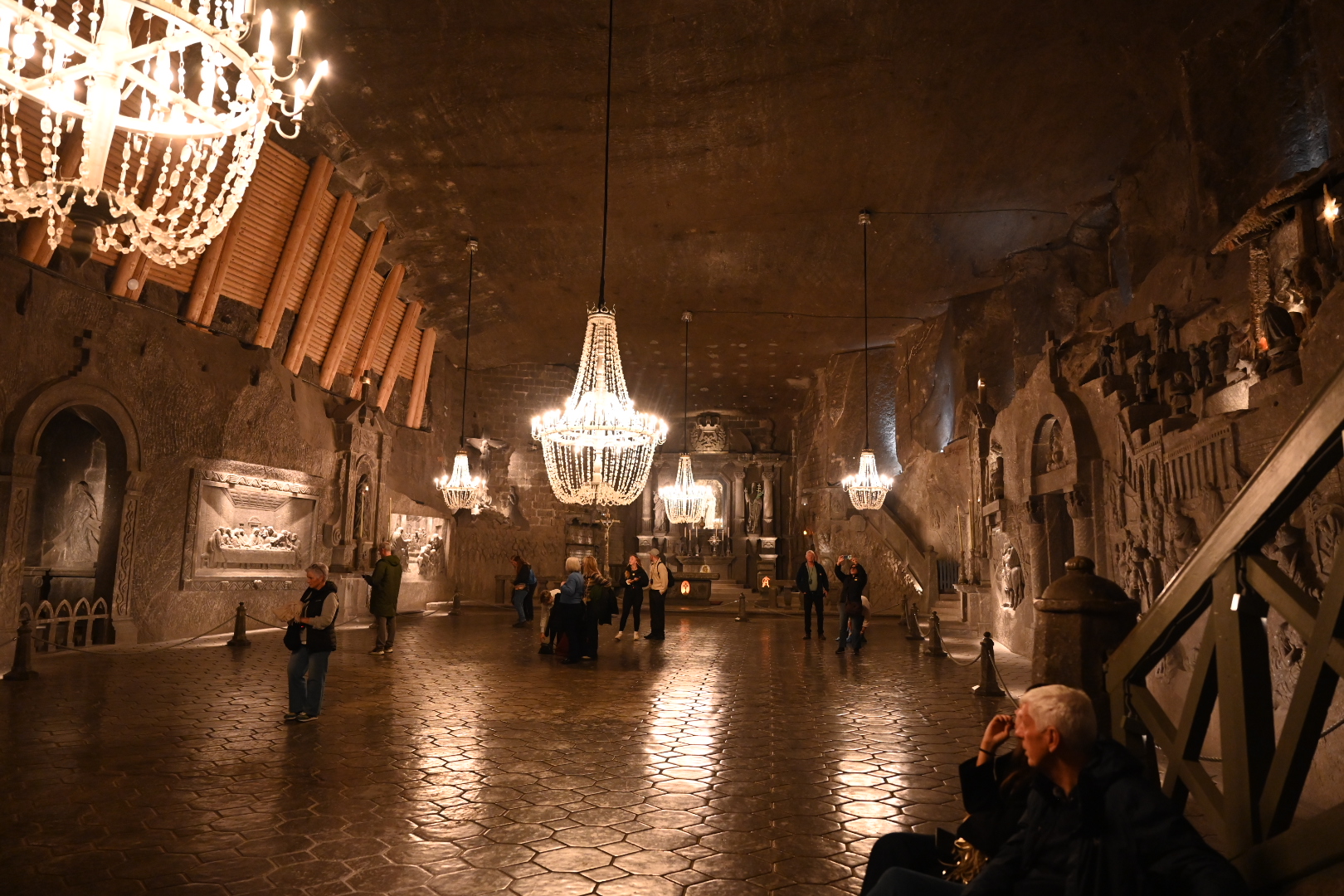
The star of the show is the St Kingas Chapel. More a cathedral than a chapel. It’s a culmination of almost two hundred years of work, substantially completed by 1886 but with the final sculptures completed in the late twentieth century. It lies 101m below the surface, is 12m high, 18m wide and 54m long. It is still a functioning chapel holding regular services and is used as a spectacular setting for weddings.
The eight hundred steps leading down to this level are modern solid wood and if you are reasonably mobile they are easy to navigate, although you do get glimpses of the original steps which would be a challenge for a mountain goat.
At times the tour seems a little rushed. I would have loved to have spent more time in St Kingas but, on reflection, the whole thing is very efficient, ensuring you are never in an excessive crowd, with one group moving on to make room for the next group.
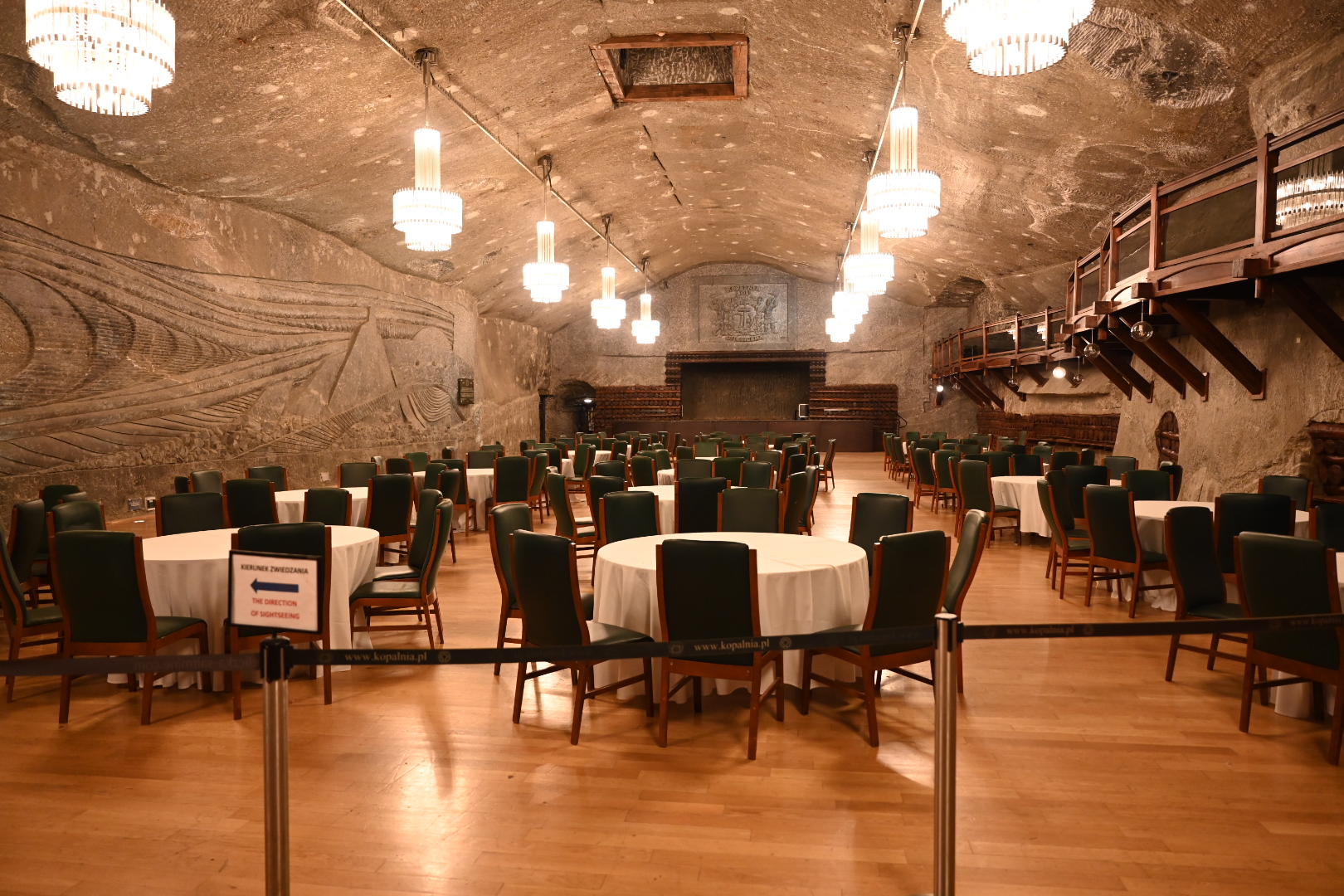
Towards the end of the tour there is a restaurant and bar, although we don’t have time to have a pint. We walk past a huge banqueting hall on our way to the lift. So you could get married and have your reception all in one salt mine.
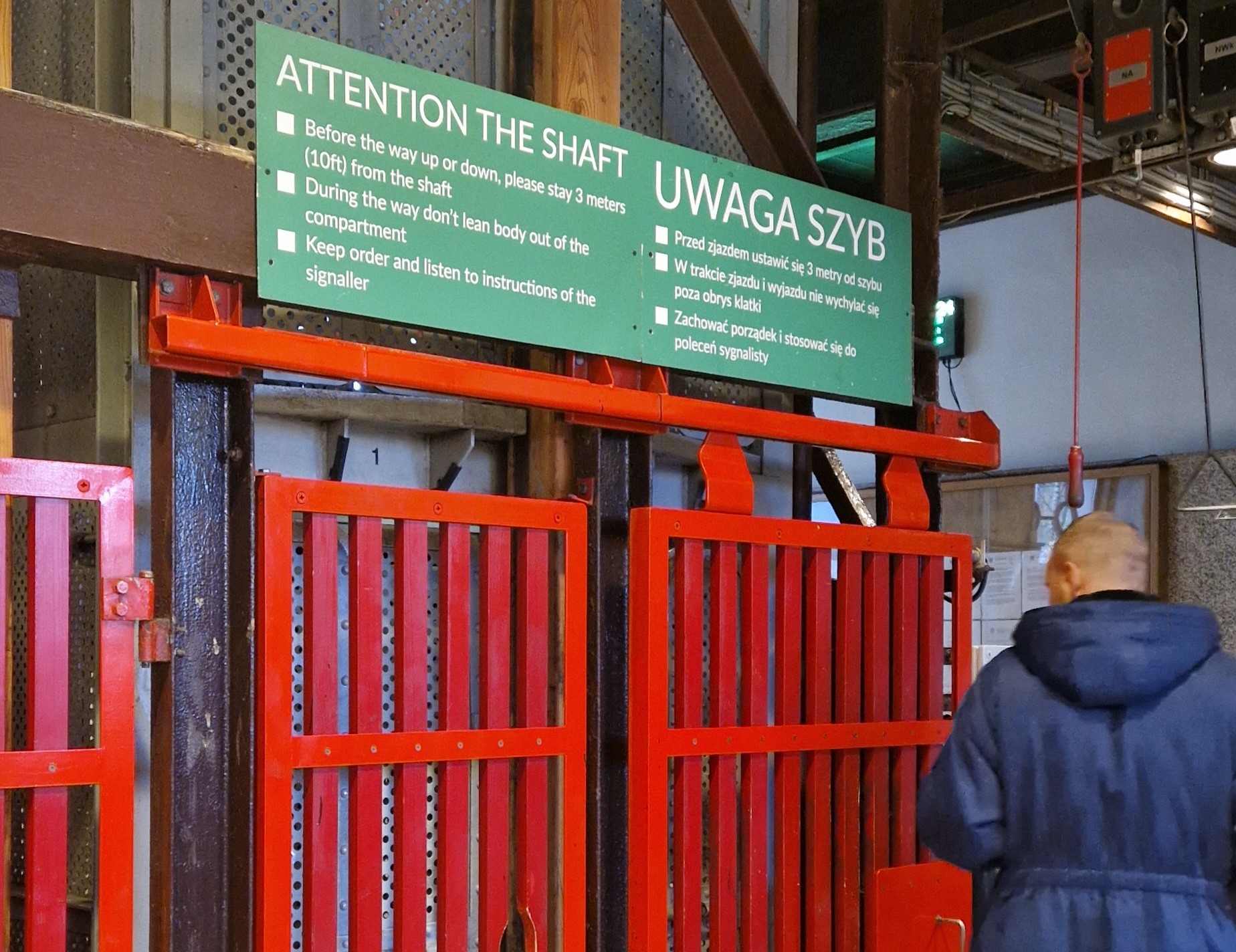
Yes, that’s right. I said lift. You don’t have to walk back up eight hundred and fifty steps, there’s a lift. A double decker lift no less. It holds eight people on each deck. Exactly eight people. With no room to swing a salty cat. It is an ‘experience’ to say the least.
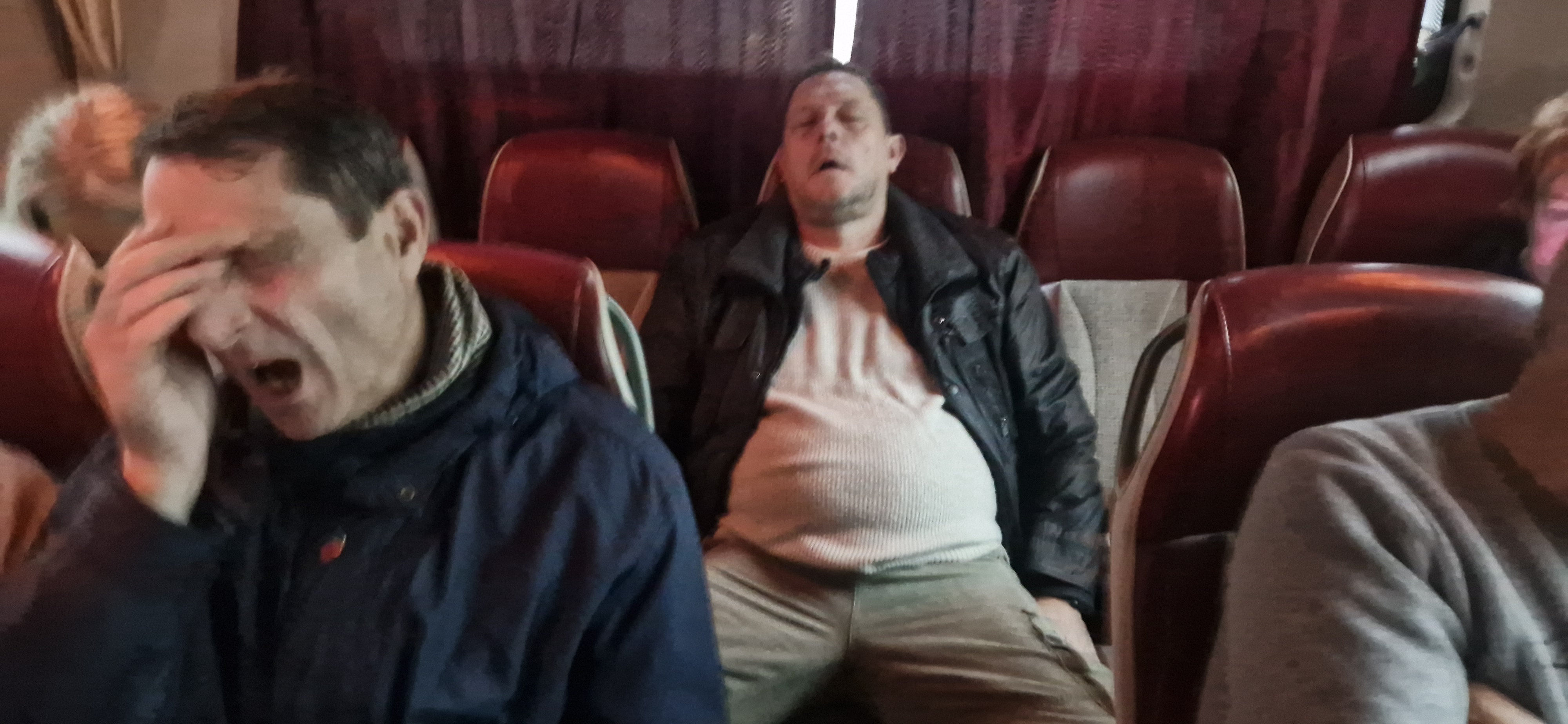
On the bus back to the hotel Bob Hoskins gets in some training for the world snoring championship.
We don’t wait to get off at our hotel, we jump off near the main square and dash through the rain to find a dry pub. We use beer to lubricate our imaginations, and Google to find a nearby restaurant. Then Mark spots that there is an Italian restaurant immediately next to the pub. Whilst Noah’s great grandson was out in the rain chopping down trees, we opted to stay dry and piled into the aforementioned Italian.
I’ve got bored of pizza of late, but all the pasta dishes had dead things in them. Pizza it was then. As it turned out, it was a rather splendid stone-baked pizza with jam, pears and goats cheese. No, I know, but it really was delicious.
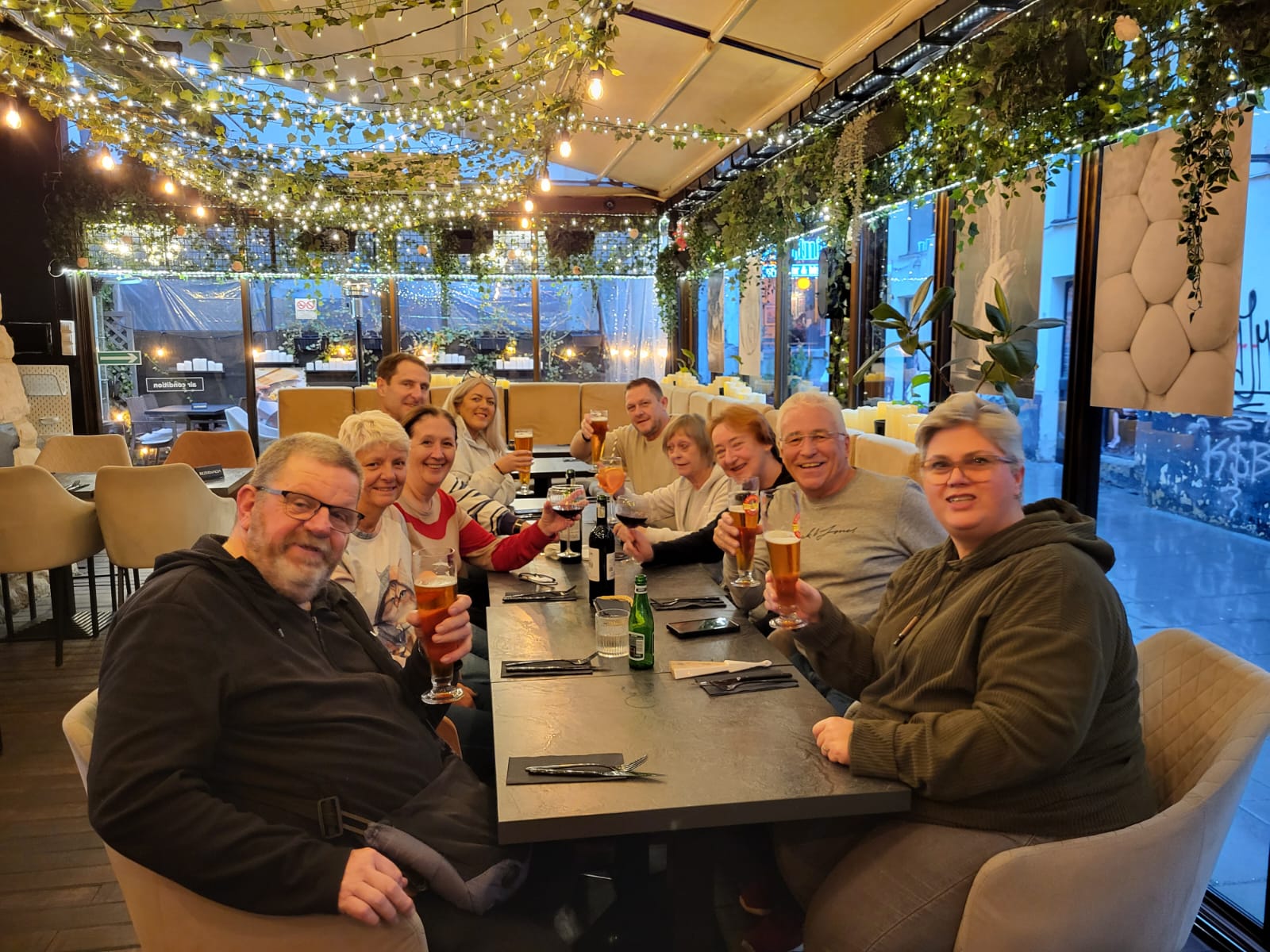
Over food I learn that apparently I recently sold my bus company and am a multi millionaire. Or at least that’s the word going around certain circles of the Wales Away knitting circle.
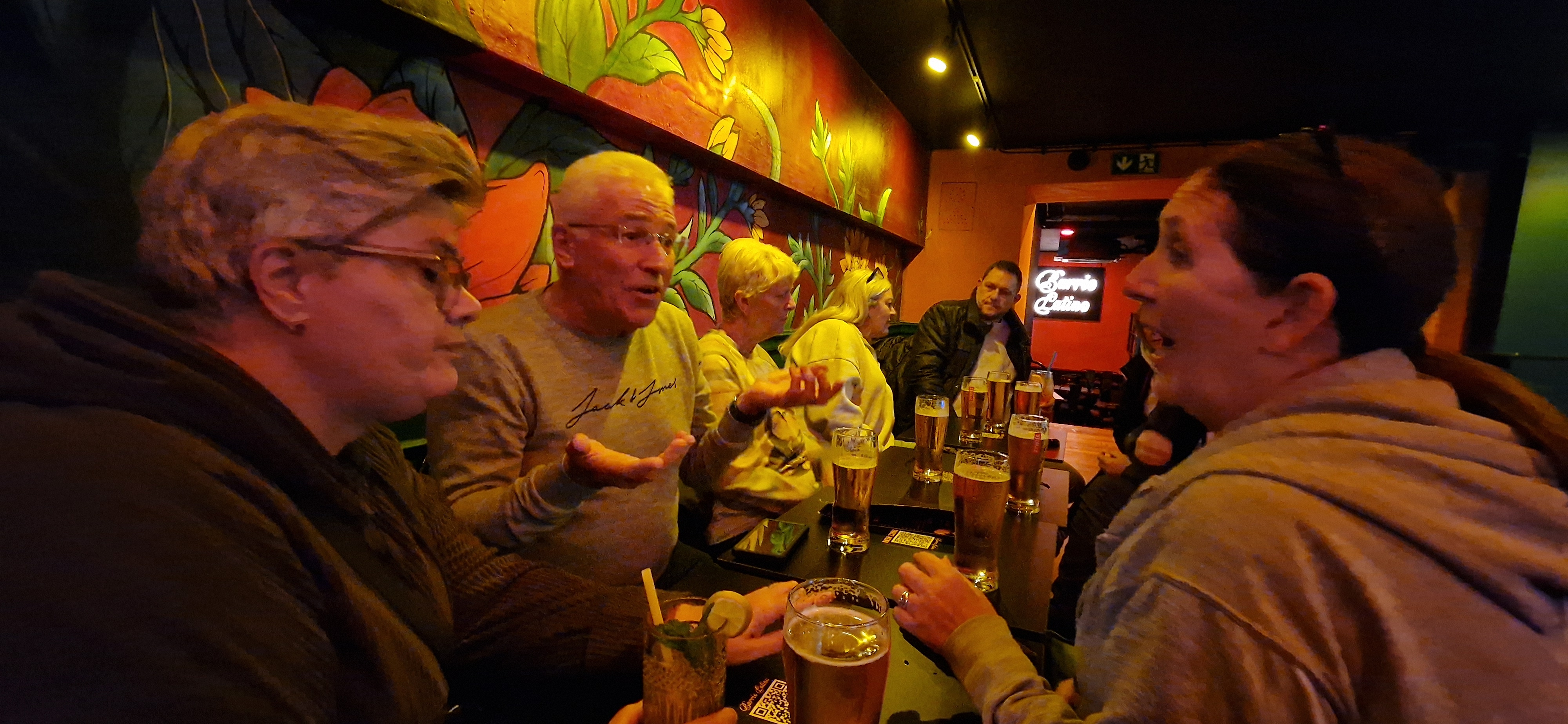
After an uncharacteristically civilised and efficient splitting of the bill, we sprinted over to the pub next door and washed down our pizza with beers and cocktails. Blueberry Mojitos. Who knew?
Eventually the rain stopped so we decided to walk together, as a united gang, towards the hotel. Then a dispute broke out about directions and the unity dissolved as we went in different directions.
Our faction, bizarrely, ended up in a rooftop bar eating again. I opted for a local delicacy, potato pancakes. They were far more interesting than I had anticipated and will definitely give them a go again. This time bottles of wine had been ordered by some and not by others, so the splitting the bill equally technique was rejected by the beer drinkers and the waiter had to work everything out separately. Although, with modern technology, it wasn’t as onerous a task as it used to be.
After a short walk along the river we were soon climbing the wooden ladder and hitting the sack, getting an early night ready for the ‘serious’ day of the trip. Auschwitz-Birkenau.